About this episode
Imagine this: A bright, capable adult, full of potential, yet paralyzed by the invisible grip of OCD. They live at home, rely on their parents for everything, and seem unable to take the first step toward independence. The parents, heartbroken and exhausted, wonder, “Where did we go wrong? How do we help without hurting?” It’s a delicate dance, a tightrope walk between support and enabling, between love and letting go.
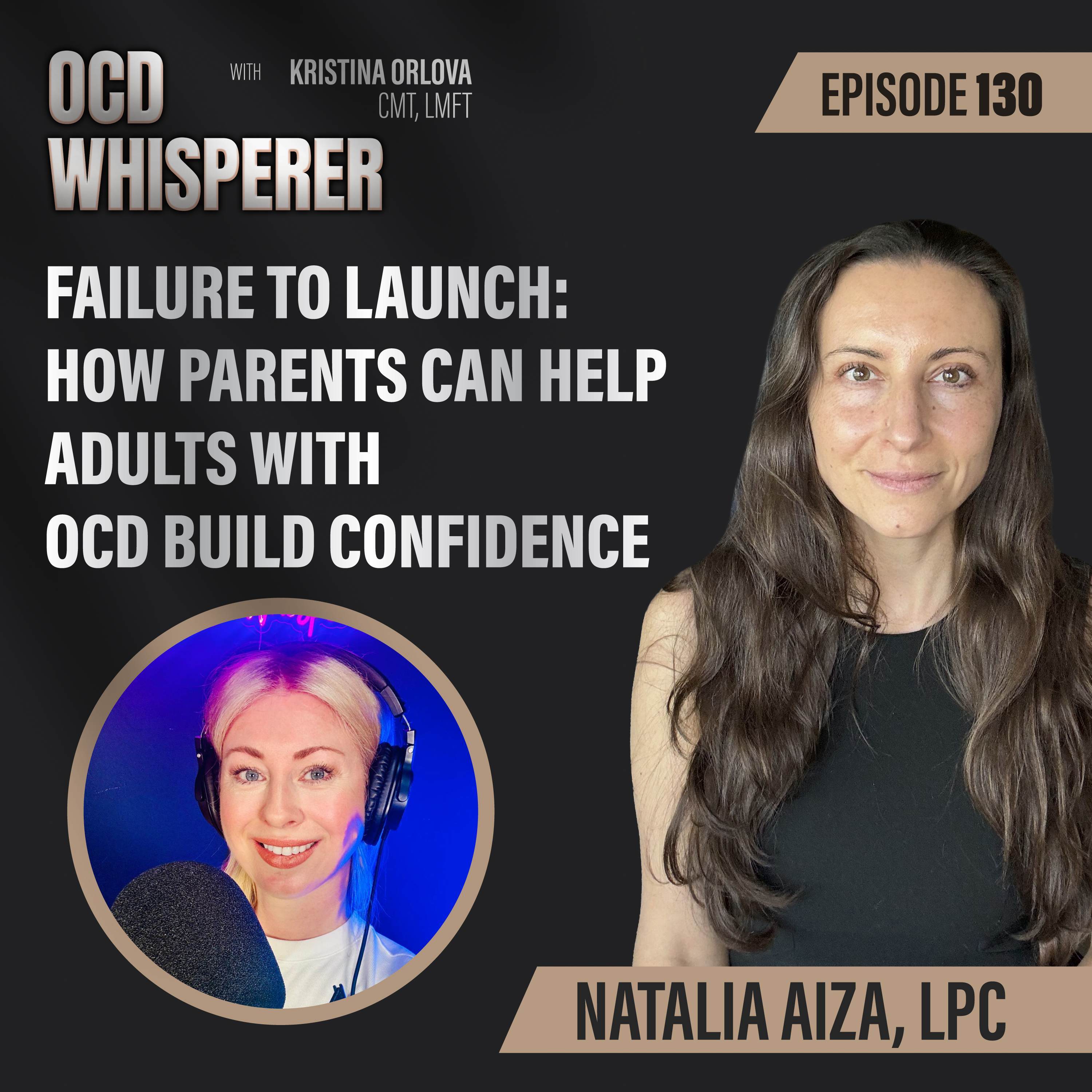
In this compelling episode of The OCD Whisperer Podcast, host Kristina Orlova, LMFT, welcomes Natalia Aiza, LPC, co-founder of Kairos Wellness Collective, for an insightful discussion on the challenges of "failure to launch" among adults with OCD. Together, they explore the complexities of dependency, the role of parental accommodations, and actionable strategies to help individuals with OCD take meaningful steps toward autonomy. Natalia shares her expertise on fostering independence through gradual, supportive approaches while emphasizing the importance of real-world exposure, skill-building, and overcoming the mental barriers that OCD creates. This episode is a must-listen for parents, caregivers, and individuals navigating the journey toward self-reliance.
In This Episode
[00:00:02] Introduction to the episode
[00:01:04] Understanding "failure to launch"
[00:02:33] Dependency and OCD
[00:04:03] Parental guidance for adult children
[00:05:41] Research on dependency
[00:07:12] Creating independence plans
[00:08:53] Challenges of financial independence
[00:09:56] Motivation and comfort zones
[00:12:41] Gradual process of change
[00:13:20] Long-term parenting goals
[00:14:49] Overcoming anticipatory anxiety
[00:16:29] Learning new skills
[00:18:35] Real-world exposure through jobs
[00:19:27] Understanding OCD's impact on progress
[00:20:45] The importance of financial independence
[00:21:34] Rethinking personal rationalizations
[00:21:45] Taking action against OCD
[00:22:14] How to connect with Natalia
[00:22:54] Closing remarks
Notable Quotes
[00:03:23] "I have certainly encountered so many families over the years of just practicing and myself treating OCD patients, and a lot of times there is a lot of conversation from family and parents especially of like, what do I do? How do I help?" - Kristina Orlova
[00:11:20] "My job is to prepare my children for when I die. If I'm not preparing my children to live on and thrive when I am no longer here, then I am not fulfilling my purpose as a parent." - Natalia Aiza
[00:16:29] "Most of the time with OCD, we really have to feel worse before we feel better, and I just want to normalize that feeling of dislike for the process because it is a hard, formative challenge." - N