About this episode
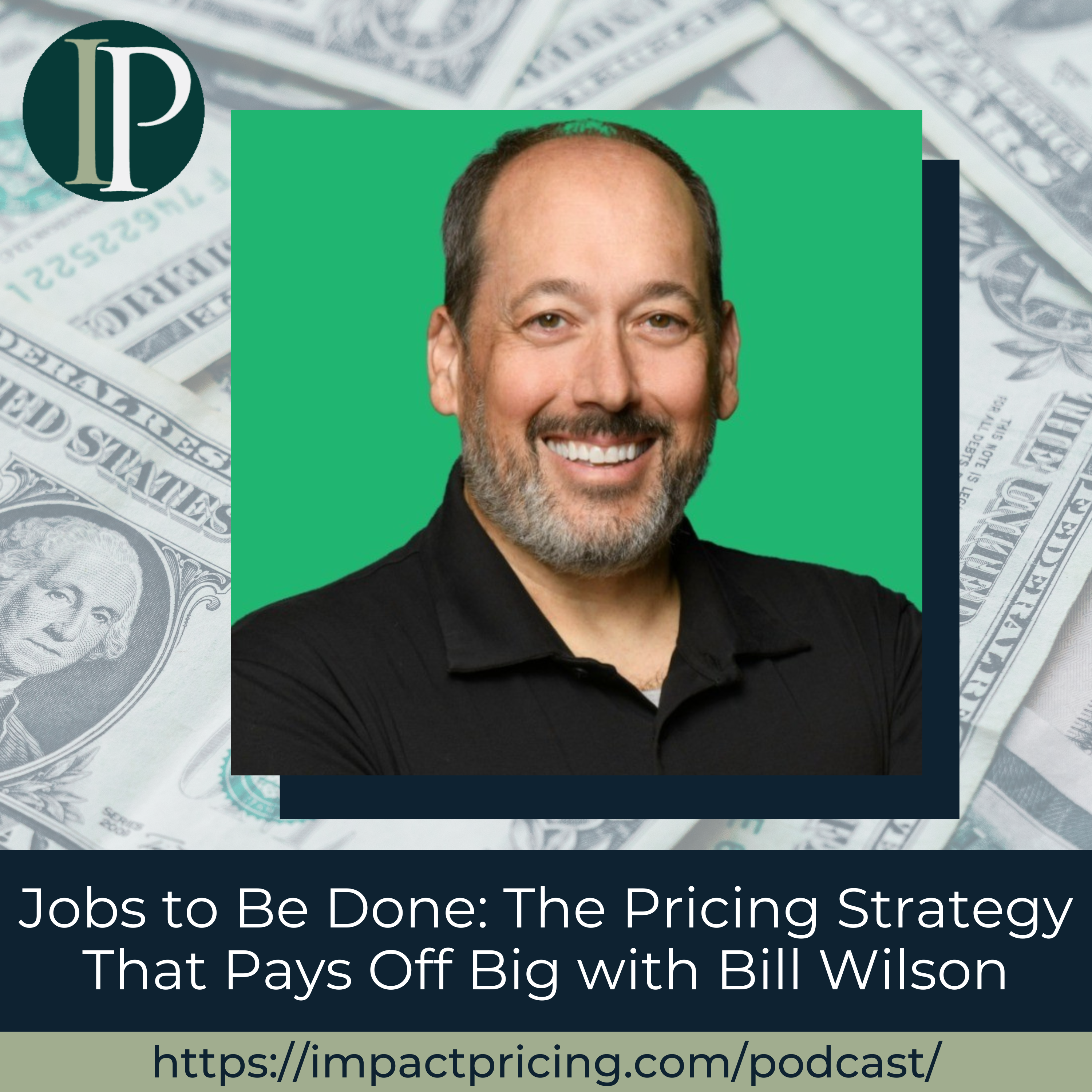
Bill Wilson, CEO and founder of Pace Pricing and official pricing advisor for the government of New Zealand, takes Mark on a deep dive into Jobs to be Done methodology and its connection to value-based pricing. From his origins as a software developer building productized services to coaching hundreds of companies through SaaS Academy, Bill reveals why pricing isn't just about the number—it's about understanding the progress customers are trying to make. In this episode, Mark and Bill dive into why the Jobs to Be Done framework offers a more effective lens than traditional problem-and-results approaches, leading to insights about value realization, emotional jobs, and why the biggest pricing advice might be the simplest: just raise your prices. Why You Have to Check Out Today's Podcast: Learn the critical role of value realization and how to effectively package products to help customers achieve desired outcomes quickly and sustainably. Understand the Jobs to Be Done framework, how it differs from traditional problem-solving approaches, and why it's vital for grasping true customer motivations. Discover practical pricing strategies, including overcoming fears around raising prices and how thoughtful price increases positively impact a company's bottom line. "Without being too on the nose about it, you probably should raise your prices." – Bill Wilson Topics Covered: 01:32 - Bill's journey from technical founder in 2007 to productizing services, escaping hourly billing, and discovering that pricing is everyone's delicate secret. 06:59 - The Product-Pricing-Positioning Triangle Why these three cannot be separated: value delivery (product), value perception (positioning), and value capture (pricing). 09:33 - What is Jobs to be Done? Bill's definition: statements describing the progress customers are trying to make, with specific ways to measure that value. 14:17 - The Trigger Moment: Status Quo Change Why the sandwich shop example illustrates how triggers create jobs people are willing to pay to solve, unlike generic problems. 20:11 - Context-Driven Pricing Meets Jobs to be Done Mark's framework of foundational problems, problem scope, and situational context—and how it maps to Bill's JTBD structure. 21:56 - System 1 vs. System 2: Emotion vs. Value Separating intuitive, emotional buying (System 1) from deliberative value calculation (System 2)—and why B2B sellers must address both. 26:39 - The Three Phases of Value Value perception (positioning), value realization (first aha moment), and value adoption (features driving continuous use).