About this episode
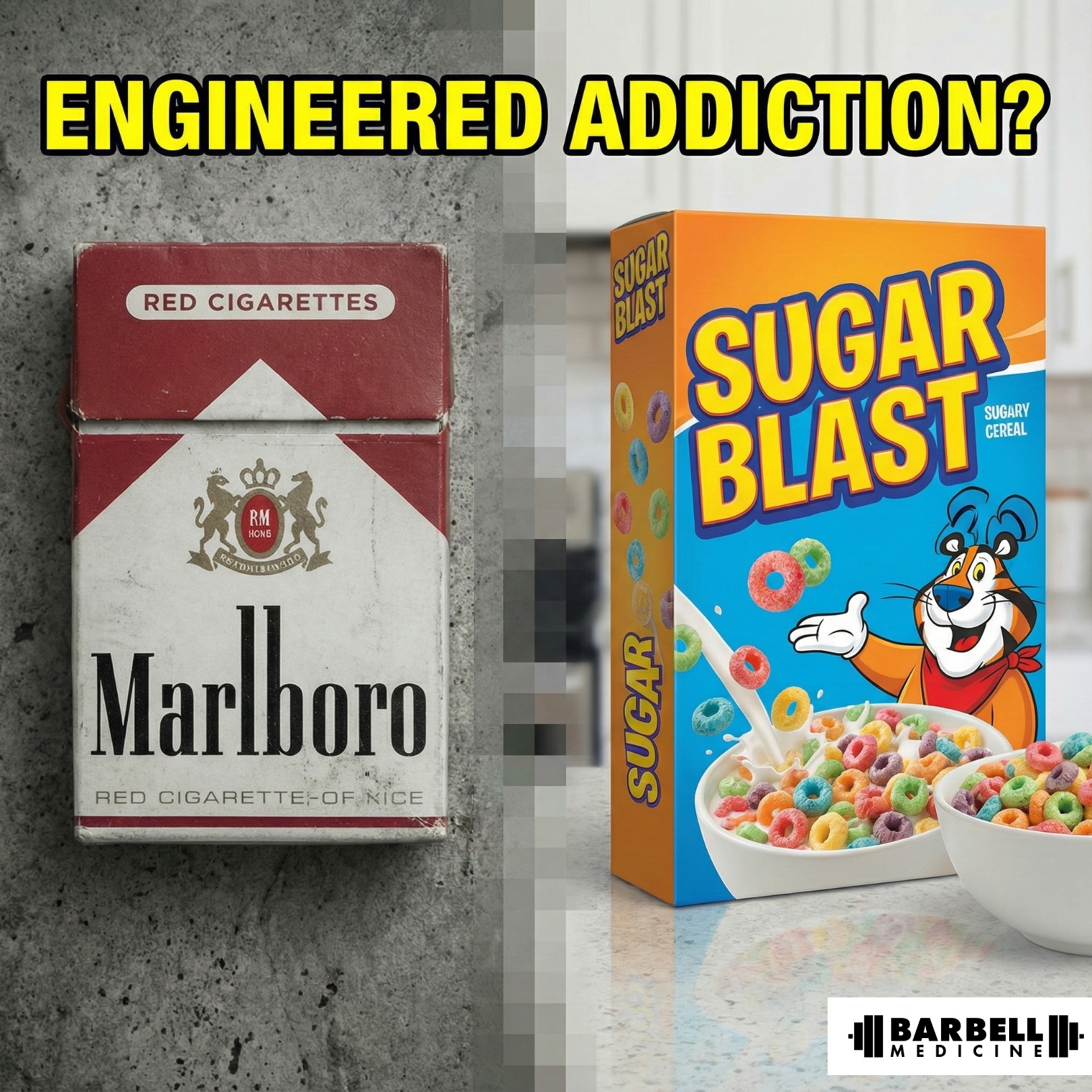
For decades, the health and fitness industry has blamed rising obesity rates on a lack of individual willpower and "poor choices." However, a landmark lawsuit in San Francisco argues that the modern food environment is a public nuisance engineered by food giants using a literal tobacco playbook. By manipulating "Bliss Points" and dismantling the natural food matrix, these companies have created an environment where healthy choices are the path of highest resistance. Understanding the shift from personal responsibility to environmental accountability is the first step in reclaiming your health.Next StepsFor evidence-based resistance training programs: barbellmedicine.com/training-programsFor individualized medical and training consultation: barbellmedicine.com/coachingExplore our full library of articles on health and performance: barbellmedicine.com/resourcesTo join Barbell Medicine Plus and get ad-free listening, product discounts, exclusive content, and more: https://barbellmedicine.supercast.com/Timestamps00:00 - The San Francisco Lawsuit vs. Big Food01:46 - Legal Shift: Personal Choice vs. Public Nuisance08:02 - Probabilistic Automaticity: Why Environment Wins13:40 - The 500-Calorie Shift: The Rise of Energy Toxicity16:11 - The Tobacco Playbook & The Bliss Point22:33 - The Potato Continuum & The Food Matrix28:09 - Yale Food Addiction Scale (YFAS) Data33:48 - The BMJ Umbrella Review on UPF Risks52:35 - Practical Strategy: Playing Offense at HomeKey Points The Public Nuisance Shift: Why legal strategy is moving away from "individual choice" toward holding corporations accountable for creating a toxic health environment.Probabilistic Automaticity: Human willpower hasn't decreased since the 1970s; instead, the probability of making a "bad" choice has been engineered to increase through environmental cues.The Bliss Point: How food scientists precisely calibrate salt, sugar, and fat to create a transient "nirvana" that mutes the brain's satiety signals.The Potato Continuum: A framework for understanding how processing transforms a simple, satiating food into an energy-dense, hyper-palatable "drug."Food Addiction Data: Why 14% of adults meeting the Yale Food Addiction Scale criteria suggests a systemic design flaw in our food supply, not a character flaw