About this episode
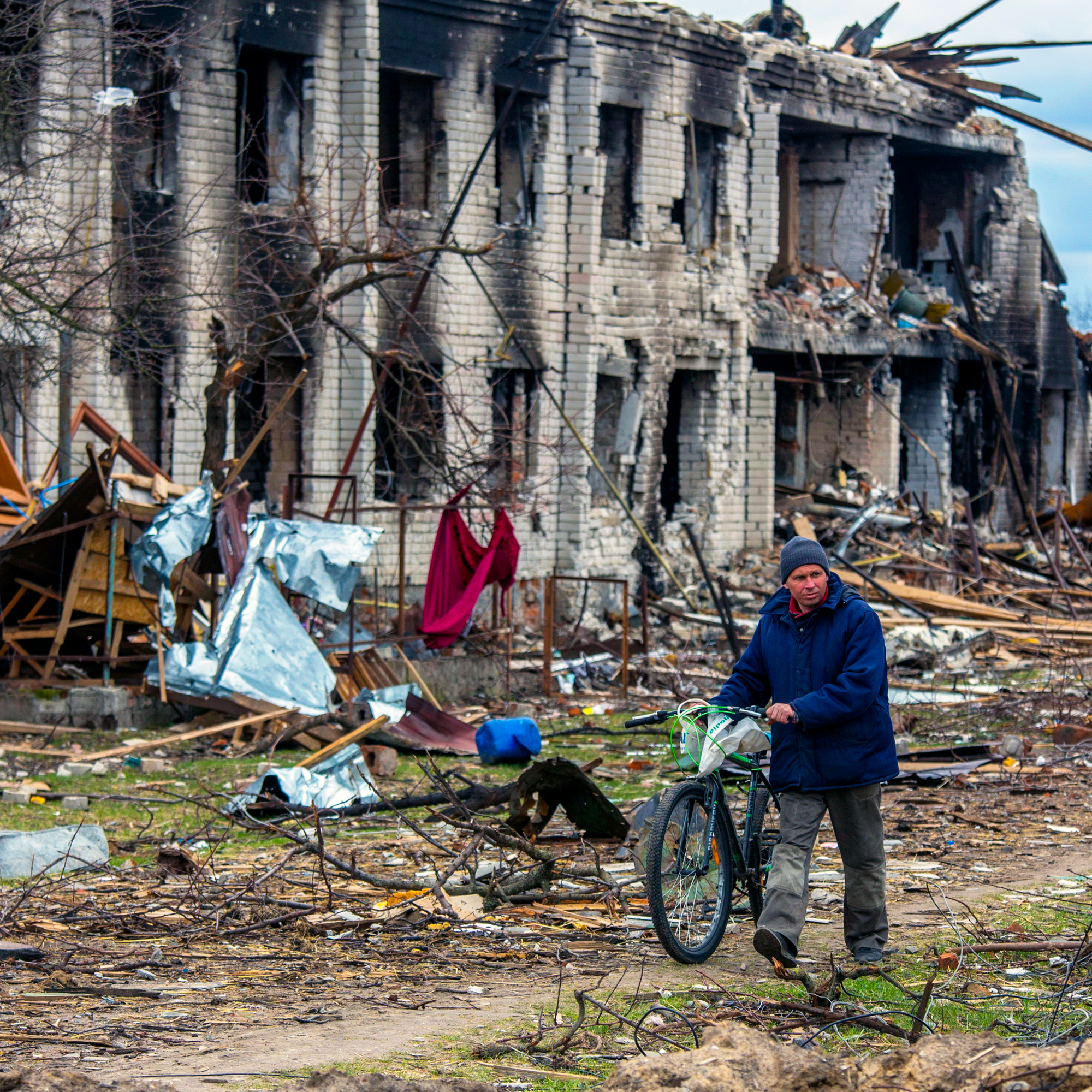
Ukraine's cities were failing long before the Russian invasion began. Kyiv and Lviv ranked among the 40 most congested cities in the world, yet neither makes the top 100 by population. Ninety per cent of Ukraine's housing stock was built before 1990. Its urban infrastructure was designed for a Soviet economy and never properly adapted for the one that followed. So when reconstruction begins, the question is not simply how to repair what was there: it is whether repairing what was there is the right goal.Edward Glaeser of Harvard, Martina Kirchberger of Trinity College Dublin, and Andrii Parkhomenko of the University of Southern California argue that the most instructive precedent is not post-USSR Warsaw, or postwar Berlin, it is postwar Tokyo. Firebombed into ruin, Tokyo rebuilt in a way that was strikingly decentralised: master plans quickly abandoned, local communities empowered to combine small lots through land readjustment, and figure it out from the bottom up. Before the war, Ukraine's economic activity was already shifting away from heavy industry and the east, towards services and the west. Reconstruction that concentrates investment where the damage is greatest, rather than where people want to build a new life, would repair the buildings and miss the point.The research behind this episode:Glaeser, Edward L., Martina Kirchberger, and Andrii Parkhomenko. 2025. "Rebuilding Ukraine's Cities: Maximizing Benefits and Minimizing Costs." Economic Policy: Papers on European and Global Issues, special issue: "What's Next for Ukraine?" To cite this episode:Phillips, Tim. 2026, "What's Next for Ukraine: Reconstruction." Economic Policy: Papers on European and Global Issues (podcast). Assign this as extra listening: the citation above is formatted and ready for a reading list or VLE.About the guestsEdward Glaeser is Fred and Eleanor Glimp Professor of Economics at Harvard University and a Research Associate of the National Bureau of Economic Research. He is one of the world's leading urban economists, with a research agenda spanning cities, housing markets, economic growth, and governance.Martina Kirchberger is a CEPR Research Affiliate and Assistant Professor in Economics at Trinity College Dublin. Her research focuses on structural transformation, urban economics, and development in low- and middle-income countries.Andrii Parkhomenko is Assistant Professor of Real Estate at the USC Marshall School of Business and a researcher at the Kyiv School of Economics. His work centers on urban and spatial economics, with a particular focus on housing markets and city growth.