About this episode
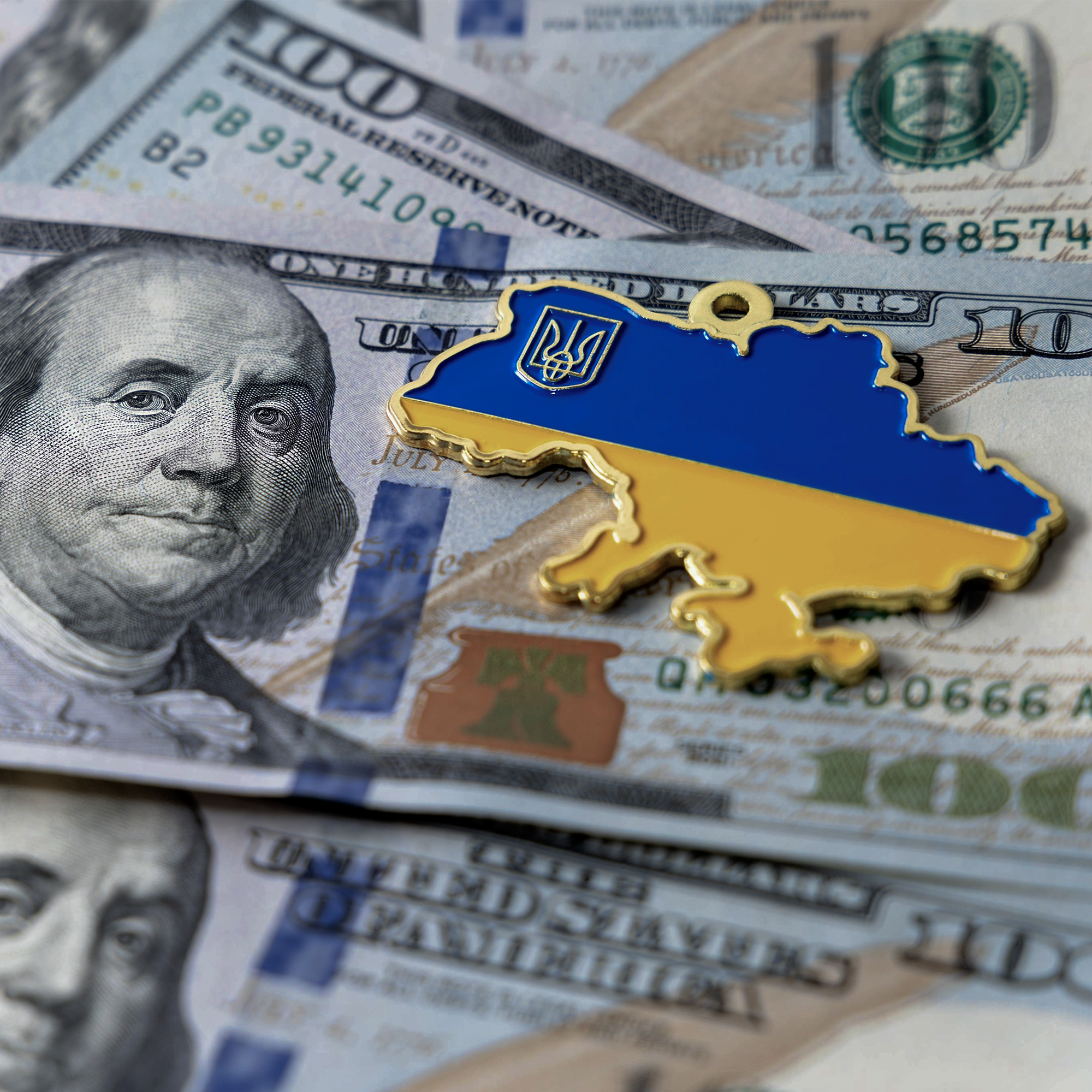
Ukraine will emerge from this war with enormous debt. The conventional wisdom treats that as an obstacle: investors weigh it before committing capital, and the burden slows the recovery before it starts. Yuriy Gorodnichenko and Maurice Obstfeld of UC Berkeley argue the opposite. A thorough restructuring of Ukraine's war debts – including, for sufficiently large obligations, outright forgiveness – is not just politically defensible but economically essential for attracting private investment. The bill for rebuilding and growing Ukraine, Gorodnichenko estimates, is $40 billion a year: $20 billion to replace destroyed capital, $10 billion to stop Ukraine falling behind its Eastern European peers, and $10 billion to start closing the gap. Put that figure next to what Poland absorbed in FDI during its post-communist transition, or the €200 billion of Russian state assets currently immobilised in Euroclear, or the budgetary support Ukraine has been receiving since 2022 – and it looks achievable. The harder challenge, they argue, is not raising $40 billion. It is directing it: towards investment rather than consumption. Ukraine didn’t grow in the post-Soviet era at the rate that its neighbours achieved. EU accession momentum and secure borders can be a signal to investors that this time the trajectory will be different.The research behind this episode:Gorodnichenko, Yuriy, and Maurice Obstfeld. 2026. "You Only Live Twice: Financial Inflows and Growth in a Westward-Facing Ukraine." Economic Policy: Papers on European and Global Issues, special issue: "What's Next for Ukraine?"To cite this episode:Phillips, Tim. 2025. "You Only Live Twice: Financial Inflows and Growth in a Westward-Facing Ukraine." Economic Policy: Papers on European and Global Issues (podcast).Assign this as extra listening — the citation above is formatted and ready for a reading list or VLE.About the guestsYuriy Gorodnichenko is a CEPR Research Fellow and Professor of Economics at the University of California, Berkeley, where he leads CEPR's Ukraine Initiative. His research spans monetary policy, fiscal policy, and the macroeconomics of growth and business cycles.Maurice Obstfeld is a CEPR Distinguished Fellow and Class of 1958 Professor of Economics at the University of California, Berkeley. He served as Chief Economist of the International Monetary Fund from 2015 to 2018, and as a member of the Council of Economic Advisers under President Obama from 2014 to 2015. He is also a Fellow of the Econometric Society and the American Academy of Arts and Sciences.Research cited in this episodeThe discussion of debt overhang draws on a body of work from the 1980s