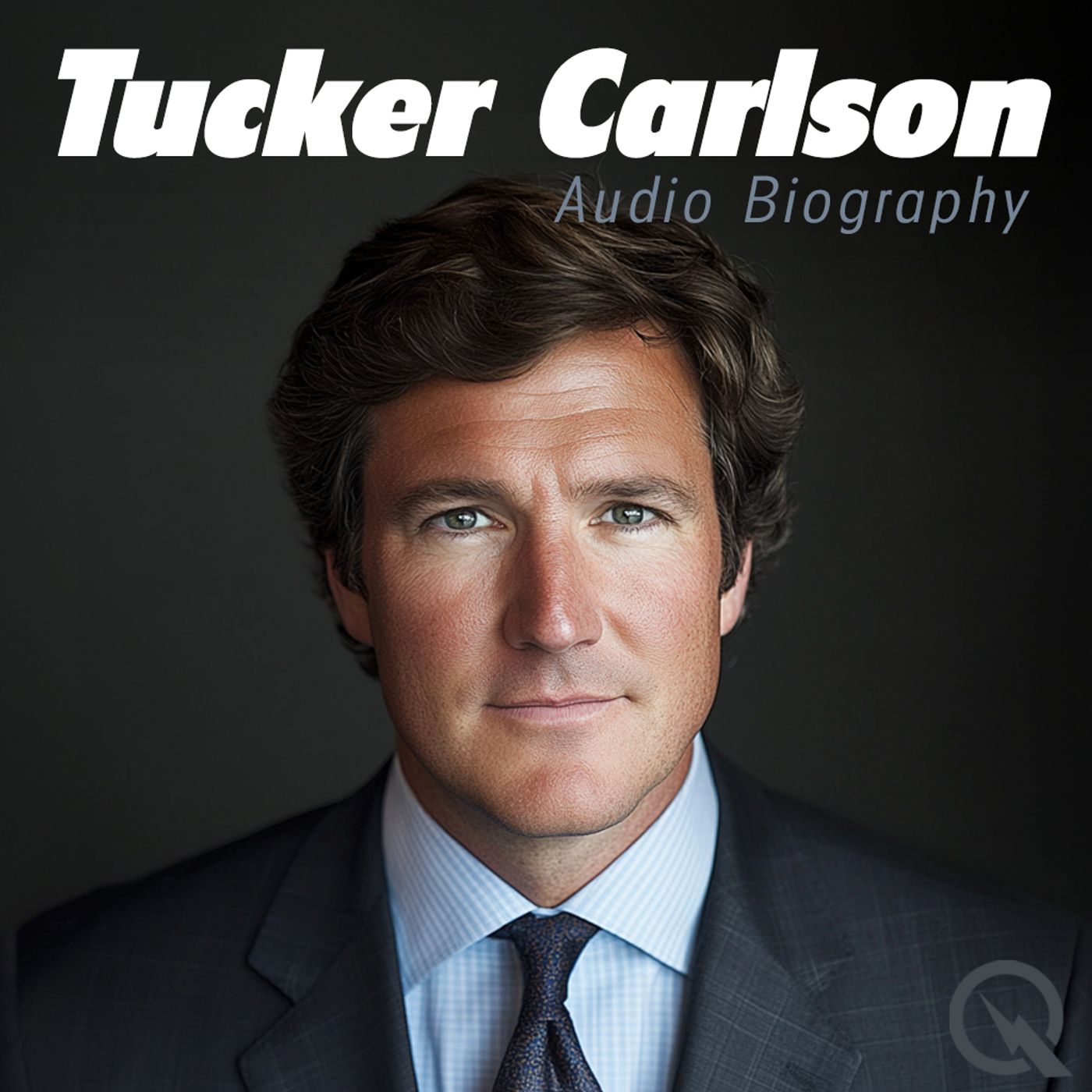
About this episode
Tucker Carlson remains highly active in the public sphere, drawing significant attention for both his media ventures and provocative political commentary. His subscription-based Tucker Carlson Network continues to release new video content and interviews, with recent episodes tackling government secrecy, institutional trust, and pressing issues like immigration enforcement and campus free speech. A recent interview featuring Representative Tim Burchett delved into government transparency and UFO disclosures, continuing Carlson’s focus on political controversies and cultural debates. The network, launched after his departure from Fox News, has become a central hub for long-form interviews and analysis, regularly trending with deep dives and attracting substantial viewer engagement.Carlson’s latest national media tour, a 16-day run through major U.S. cities featuring live audiences, has been a headline event. He’s shared the stage with a roster of high-profile guests such as Russell Brand, Tulsi Gabbard, Kid Rock, Alex Jones, Marjorie Taylor Greene, and Donald Trump Jr. The tour’s finale in Jacksonville, Florida, drew particular attention, highlighting Carlson’s shift toward in-person engagement and reinforcing his status as a central figure in contemporary conservative politics. He also played a prominent role stepping in for the late Charlie Kirk on the Turning Point USA campus tour, appearing alongside figures like Megyn Kelly and Glenn Beck—an event seen as a major moment for free speech debates in higher education.Financially and professionally, Carlson is pushing forward with his plan to build a sustainable independent media company. Reports from outlets like The Wall Street Journal and Fortune indicate he and longtime partner Neil Patel are raising substantial capital—estimated at $15 million in seed funding—to expand their subscription-based video ventures, especially focusing on distribution through platforms like X (formerly Twitter). This entrepreneurial push is drawing comparisons to other high-profile, personality-driven conservative media enterprises, with Carlson described as a leading force in what industry experts term “patriotic capitalism.”Carlson’s recent interviews and on-air comments have sparked intense reactions across the political spectrum. Supporters on the right see him as an essential counterweight to establishment media, praising his willingness to embrace controversial topics others avoid. Critics, however, continue to accuse him of amplifying themes and guests—including far-right figures like Nick Fuentes—that mainstream outlets consider dangerous or extremist. Notably, after a recent on-air exchange with Texas Senator Ted Cruz over religious justifications for U.S. support of Israel, Carlson found himself at the center of renewed debate, with progressive groups and even some conservatives sharply criticizing his rhetoric and platform choices.Media watchdogs and journal