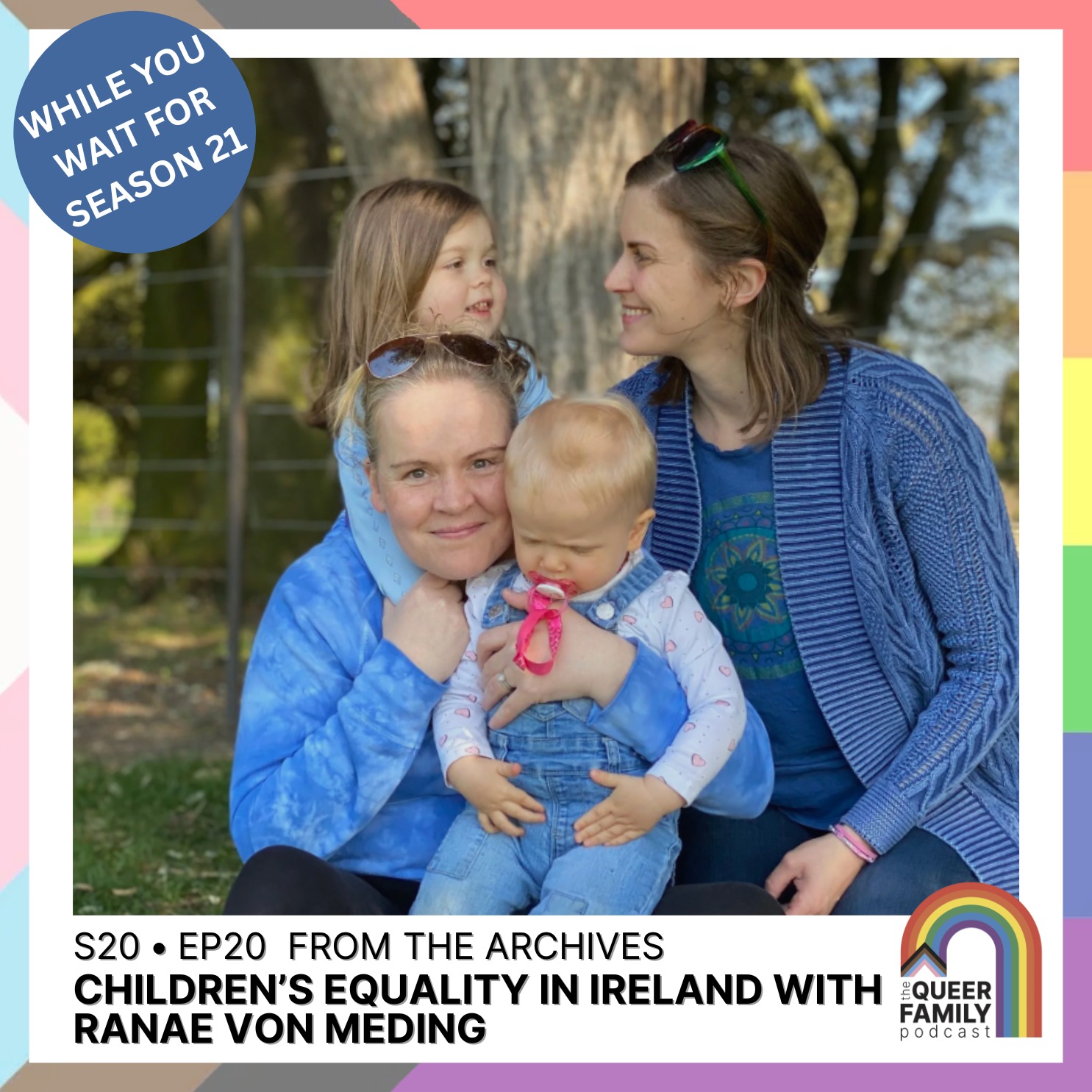
About this episode
This episode was recorded in 2020 and originally released under the show’s former name, If These Ovaries Could Talk. While Ranae von Meding’s family life may look a bit different today, the laws in Ireland have not meaningfully changed—and many same-sex parents are still fighting for full legal recognition and protection for their children.At eight months pregnant, Ranae von Meding learned a shocking truth: after the birth of her child, her wife Audrey would not be legally recognized as a parent under Irish law—even though they were married, and even though Audrey is the genetic parent.In this archival episode (recorded in 2020), Ranae shares how she and Audrey built their family through reciprocal IVF abroad, the exhausting workarounds required when care isn’t fully accessible at home, and why Irish law has left many LGBTQ+ families in precarious legal territory. She also explains what it looks like to fight back—through advocacy, organizing, and Equality for Children, a campaign centered on one core message: this is about children’s rights.🏳️🌈 Key TakeawaysMarriage equality doesn’t automatically mean parental equality. In Ireland, being legally married doesn’t guarantee both parents are recognized when it comes to children.In many cases, the birth parent is the only legal parent. Even when the non-birth parent is genetically related (using their eggs), they may still have zero legal status.Reciprocal IVF wasn’t accessible in Ireland at the time. Ranae and Audrey had to travel abroad (Spain and Portugal), navigate complex logistics, and coordinate care at home without local fertility support.New legislation was coming—but only for a narrow group. The criteria described would exclude many families, including Ranae’s.Their legal action aims to amend their children’s birth certificates. The case isn’t about money—it’s about recognition and rights.A court win could create momentum and pressure. Even if it doesn’t instantly change the law for everyone, it could force the government to respond faster and set a path others can follow.Equality for Children became a real movement—fast. Within 24 hours of a community “call to action,” the group had a name, a website, branding support, and a public launch strategy.This advocacy is powered by parenting. Ranae describes the specific kind of relentless strength that shows up when the stakes are your kids.🏳️🌈 About the Guest(s)🏳️🌈Robin Hopkins — original co-host of If These Ovaries Could Talk and in