About this episode
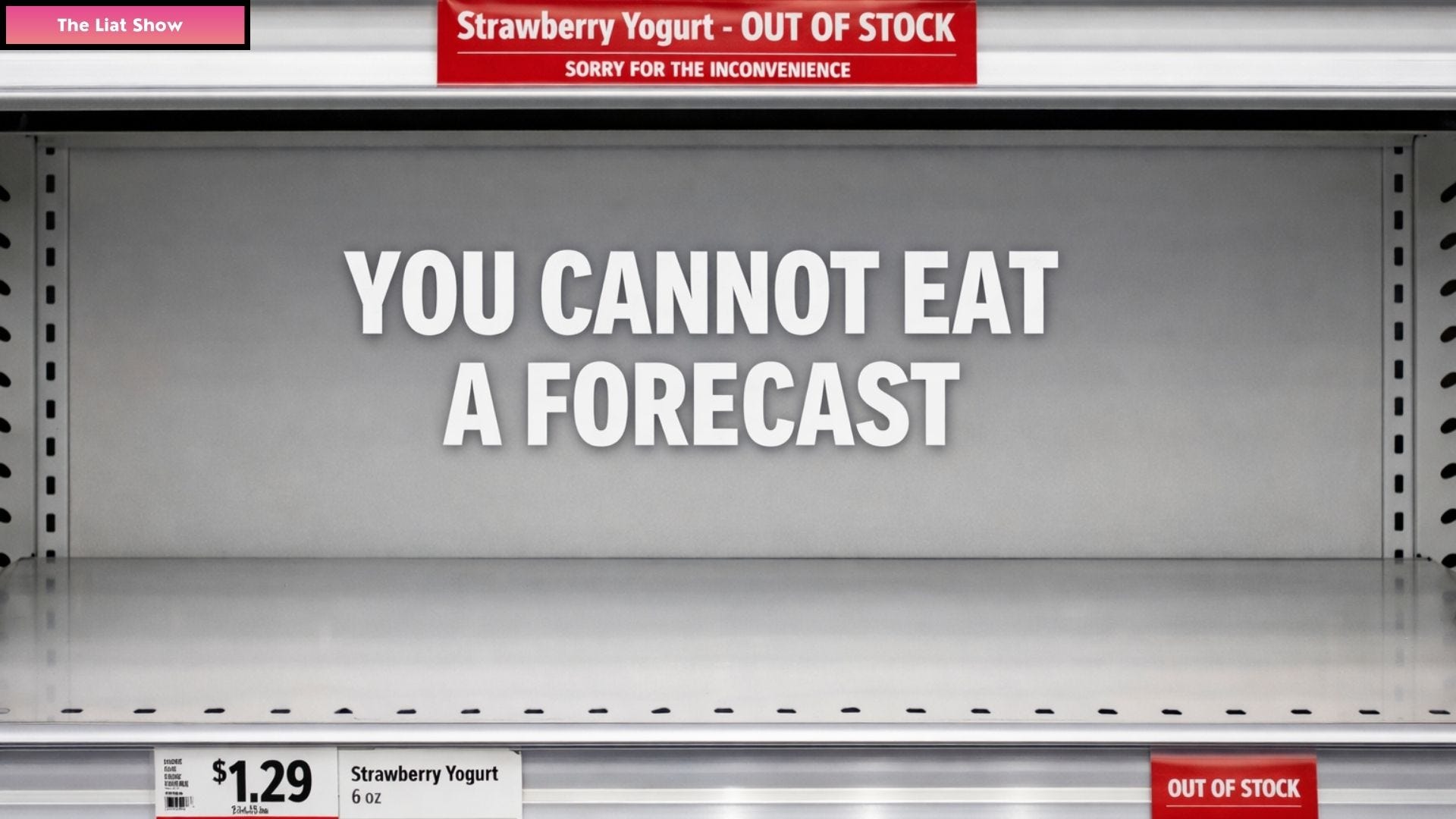
Current Time.The previous piece I published focused on SKU-level planning and forecasting. It belongs to the professional aspect of my life, so it includes technical terms and explanations used by people who work in operations and the supply chain industry. This topic may seem boring and grey, part of the blue-collar work life, which is miles away from the people writing here or creating podcasts; however, this topic, SKU-level forecasting, is rooted in our lives, no matter what we do, as it focuses on food items we consume in grocery stores, restaurants, catering, and any foodservice we use regularly.The first wave of the Industrial Revolution in the late 18th century was driven by steam power and mechanization, transforming agriculture and manufacturing and enabling the rise of factories. The second wave in the late 19th century was driven by electricity and mass production, expanding industry into large-scale systems.The technological revolution of the mid-20th century was driven by electronics and computers. We are now in the early phase of an AI-driven technological revolution that began accelerating around 2022, marking a structural shift within the broader digital age.We were all born into an era in which groceries are available on shelves year-round, so we take this reality for granted. However, most people are unaware of the daily operational decisions required to prevent empty shelves or out-of-stock items.In this episode, the hosts walk you through the problem and explain the architectural aspects in simple terms that anyone can understand. You don’t need a Ph.D. in Industrial Engineering, Supply Chain, or Logistics to understand the structural problem with SKU-level forecasting today.Moreover, you don’t need 20 years of experience to understand that the solution lies inside a narrow ordering window, the short timeframe in which decisions actually change outcomes. Outside that window, forecasting becomes a reporting tool. Inside that window, it becomes an execution layer.PlanToIt is built as a SKU-level execution architecture that operates inside that ordering window. It is not a category-level forecasting tool. It is designed for item-level decisions before the truck leaves the dock. You don’t need to be a software engineer to understand that, and the hosts explain it clearly to any audience.There is a quote often attributed to Albert Einstein, “If you can’t explain it simply, you don’t understand it well enough.” Whether he said it or not, the principle is crucial in the AI era. Models now code more than humans, and buyers must understand the architecture of the solutions they choose.Similar to building your own house or buying one, where architects explain the process even to clients who are not professional building architects, the same applies here. You do not need to know how to code