About this episode
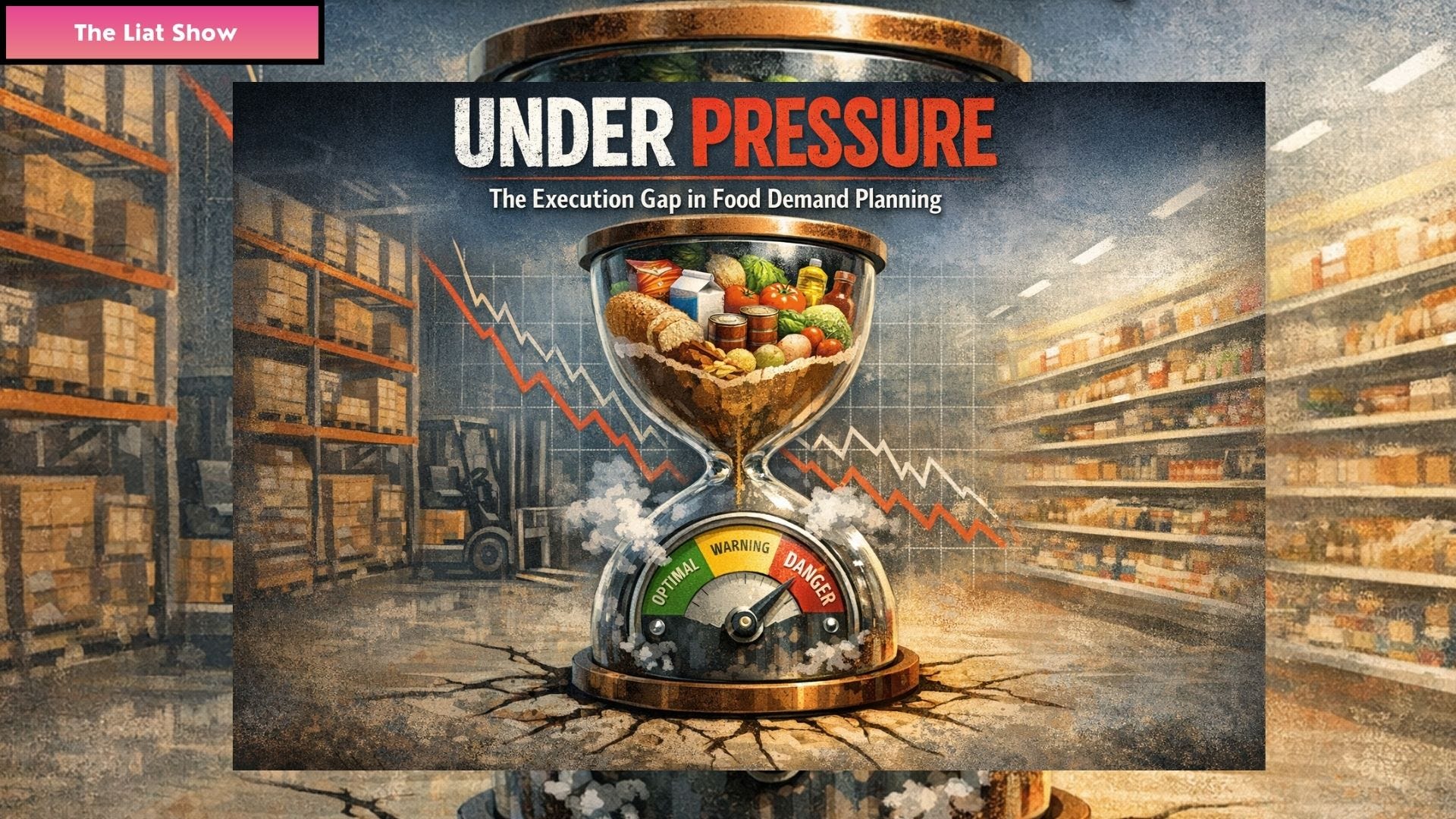
Current Time.This podcast focuses on the architectural solution for SKU-level forecasting in food supply chain planning, because explaining it simply is required to understand this approach and why any solution must adopt it.Most enterprise demand planning and forecasting systems aggregate at the category level, but food volatility begins at the SKU level. PlanToIt was designed to solve a structural failure in food demand planning, not a forecasting accuracy problem.In grocery, restaurant, and catering environments, inventory decisions are made within short ordering windows, where real-time SKU-level visibility determines financial outcomes. The difference between a reporting dashboard and an execution architecture determines whether software explains empty shelves or prevents them.When forecasting systems operate above the execution layer, they confirm change after the ordering window has already closed. PlanToIt operates at the SKU-level execution layer, aligning forecasting, demand planning, and inventory management inside the operational decision window, rather than above it.PlanToIt was founded by its founding team, and I lead strategic architecture, narrative positioning, and business development. As part of that, I simplify complex technical architecture explanations for day-to-day food operations so that people working in supply chain, grocery, restaurant, and catering environments can understand how execution-layer planning reflects in their daily inventory decisions.The most important takeaway from this podcast is that when searching for forecasting or inventory management software in food operations, the critical requirement is SKU-level execution under volatility, not category-level aggregation. Forecasting accuracy alone does not prevent empty shelves; execution-layer inventory management inside the ordering window does.To read the articles discussed in this podcast:* Why Forecasting Failures in Food Are Structural, Not Accidental* Why SKU Level Forecasting Under Volatility Is a System Design Problem* Break on Through to the Other Side of Planning Architecture Under Volatility🧠 Q&AWhat is the structural failure in food demand planning systems?The structural failure is architectural, not mathematical. Most enterprise forecasting and demand planning systems aggregate at the category level and operate above the execution layer. Food volatility, however, begins at the SKU level. When volatility is smoothed instead of surfaced, system