About this episode
In this episode of The Food Professor Podcast, hosts Michael LeBlanc and Dr. Sylvain Charlebois begin with their weekly conversation on the latest food and agriculture news shaping the global agri-food economy. The discussion covers geopolitical tensions in the Middle East and the potential ripple effects on energy prices, transportation costs, and food inflation. The hosts explore how rising fuel prices could impact the cost of food production and distribution and how much money already strapped Canadians have to spend on food, while also discussing broader global trade implications for agriculture. And maybe, just maybe, the upside to the war in Iran. They also talk about the social media CEO burger-bit war between McDonalds and Burger King, and of course A&W!
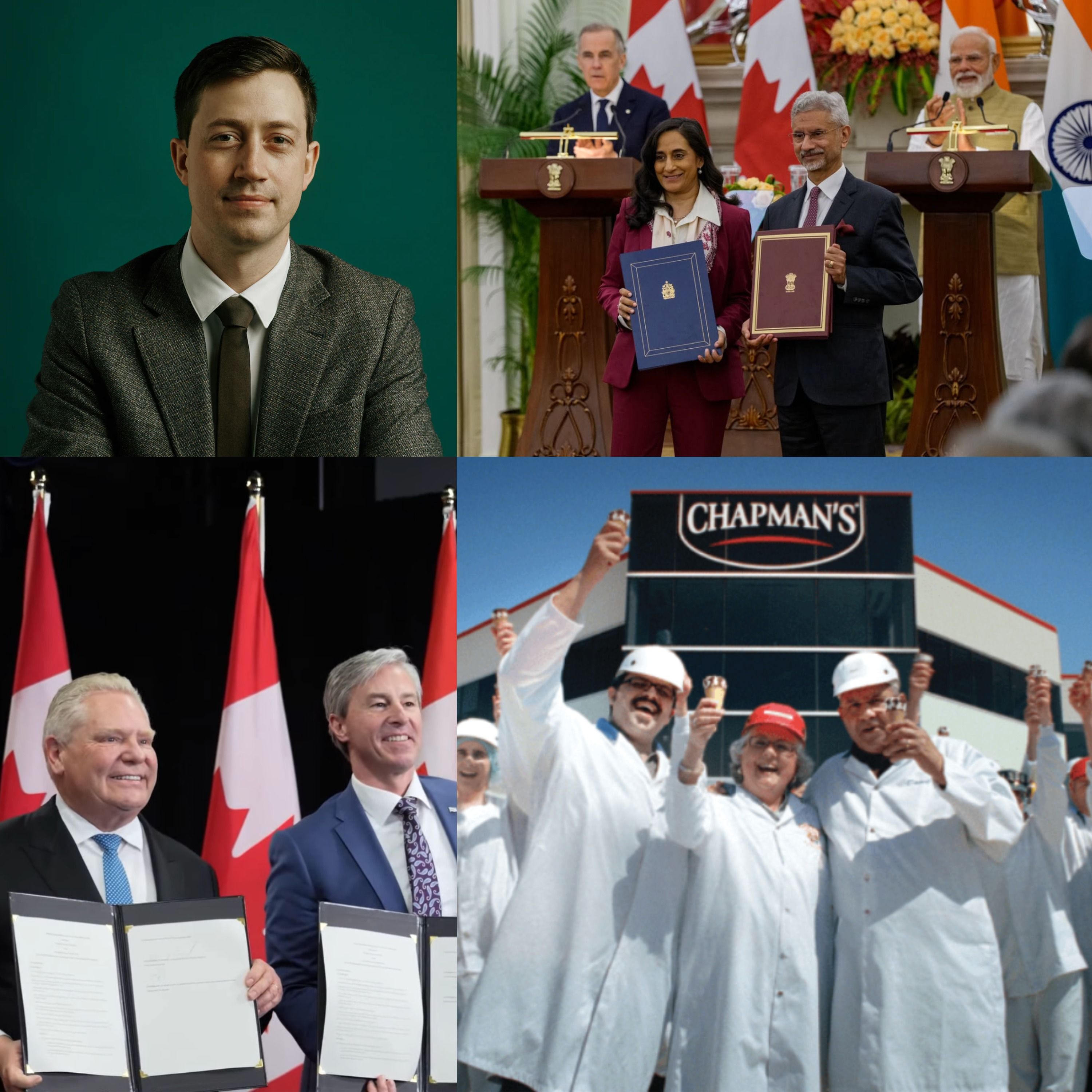
The episode also examines Canada’s evolving international relationships, including new diplomatic and trade developments involving India and Australia, India being a critical growth market for Canadian agricultural exports. LeBlanc and Charlebois discuss the importance of pulses, grains, and other agri-food commodities in strengthening Canada’s role as a global food supplier. They also look at new interprovincial agreements that could expand alcohol trade between Ontario and Nova Scotia, highlighting the potential for Nova Scotia's amazing wine and beverage producers to reach new domestic markets. The hosts round out the news segment with commentary on front-of-package nutrition labelling research and how such policies may influence consumer behaviour and long-term public health outcomes.
The conversation then shifts to an in-depth interview with Gavin Schneider, CEO and Co-Founder of Maia Farms, a Vancouver-based food technology company developing sustainable mushroom and mycelium-based protein ingredients. Schneider explains how Maia Farms originated from the Canadian Space Agency’s Deep Space Food Challenge, which aimed to develop food production systems for future space missions. What began as a solution for astronauts has since evolved into a rapidly growing food innovation company focused on improving everyday food products on Earth.
Schneider describes how Maia Farms operates primarily as a B2B ingredient supplier, partnering with food manufacturers to integrate mushroom-based ingredients into a wide range of products. These ingredients can replace or complement traditional proteins such as soy, pea, or meat while improving taste, texture, and nutritional value. The company’s mushroom-based proteins are already being used in ready-to-eat meals, soups, snacks, and other packaged foods.
A key differentiator for Maia Farms is its scalable distributed manufacturing model, which allows the company to partner with production facilities across North America rather than building capital-intensive factories. This strategy has enabled Maia Farms to scale qui