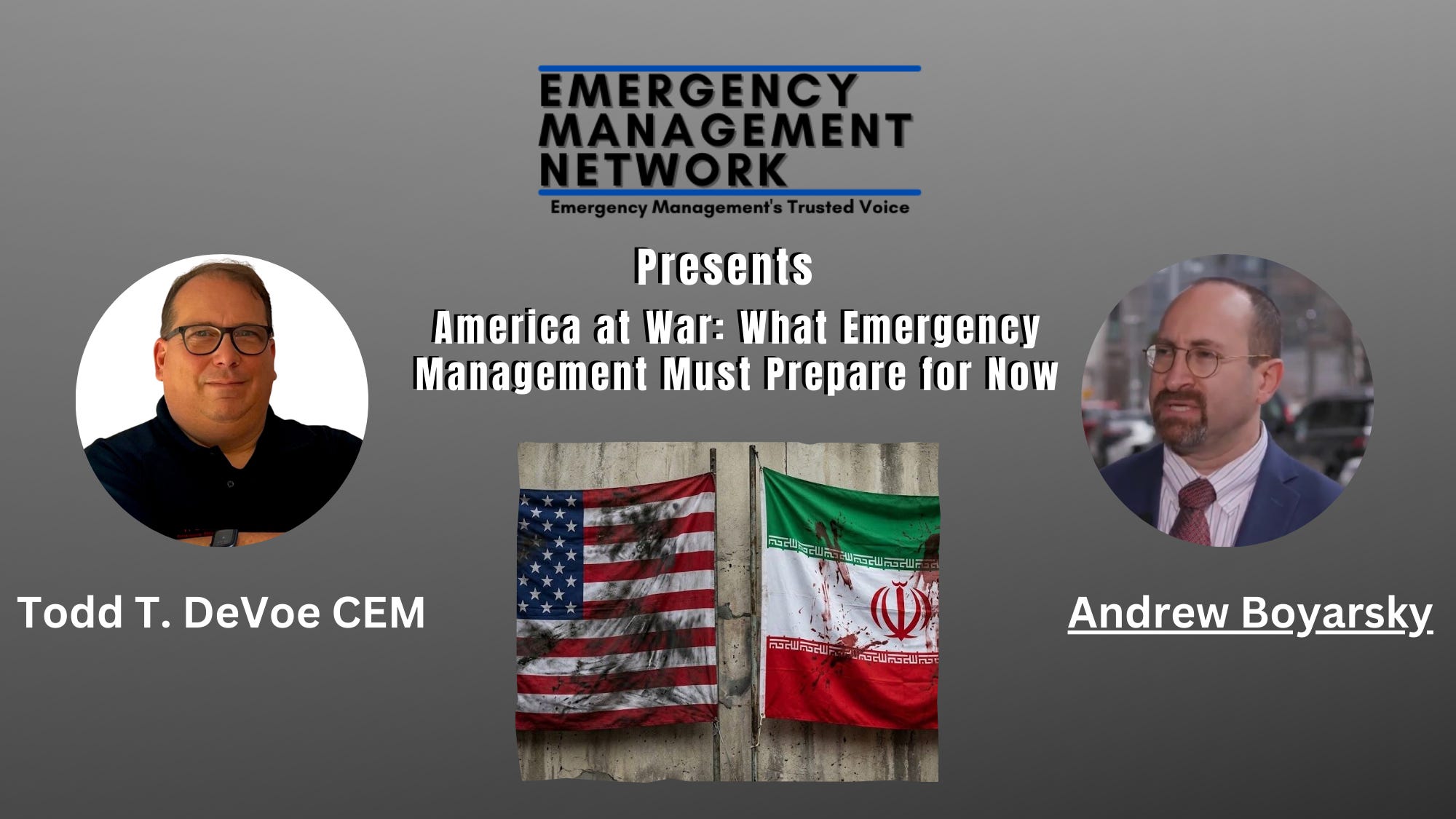
About this episode
With Todd T. DeVoe & Andrew BoyarskyEpisode OverviewCoordinated U.S. and Israeli strikes against Iran, combined with the President’s announcement of open conflict, signal a fundamental shift in the national risk landscape. Whether or not Congress formally declares war, the operational environment for emergency managers has changed.In this episode, Todd DeVoe and Andrew Boyarsky unpack what this moment means for emergency management professionals across the United States. This is not a geopolitical debate. It is a strategic planning conversation.War does not replace hurricanes, earthquakes, wildfires, cyber incidents, or technological failures. It compounds them. The all-hazards framework remains intact, but the threat environment grows more complex and less forgiving.This discussion focuses on practical implications for local, state, tribal, territorial, and federal emergency managers.Key Themes Discussed1. War vs. International Armed ConflictAndrew clarifies the legal distinction between a formal declaration of war and an international armed conflict. Todd reframes the issue operationally: regardless of terminology, the domestic risk environment has shifted, and emergency managers must respond accordingly.2. Heightened Risk of Terrorism and Targeted ViolenceHistorical precedent shows that U.S. overseas military engagement can coincide with increased domestic threat reporting involving lone actors and ideologically motivated violence. The hosts discuss the importance of reviewing multi-site response plans, exercising complex coordinated attack scenarios, and strengthening intelligence-sharing pathways.3. Cyber as a Primary Hazard, Not a Secondary ConcernState-level adversaries can disrupt critical infrastructure without crossing U.S. borders. The episode explores the real-world impacts of cyberattacks on 911 centers, hospitals, water utilities, fuel systems, and government services.Reference: Cybersecurity and Infrastructure Security AgencyEmergency managers are encouraged to review continuity plans and ensure operations can continue in cyber-degraded environments.4. The National Preparedness Framework Still AppliesThe 32 Core Capabilities outlined by the Federal Emergency Management Agency remain central to planning and operations. Protection, response, mitigation, and recovery functions become more critical under sustained geopolitical strain.The conversation emphasizes prolonged EOC activation readiness, supply chain impacts, and endurance planning.5. Public Communication and TrustConflict amplifies uncert