About this episode
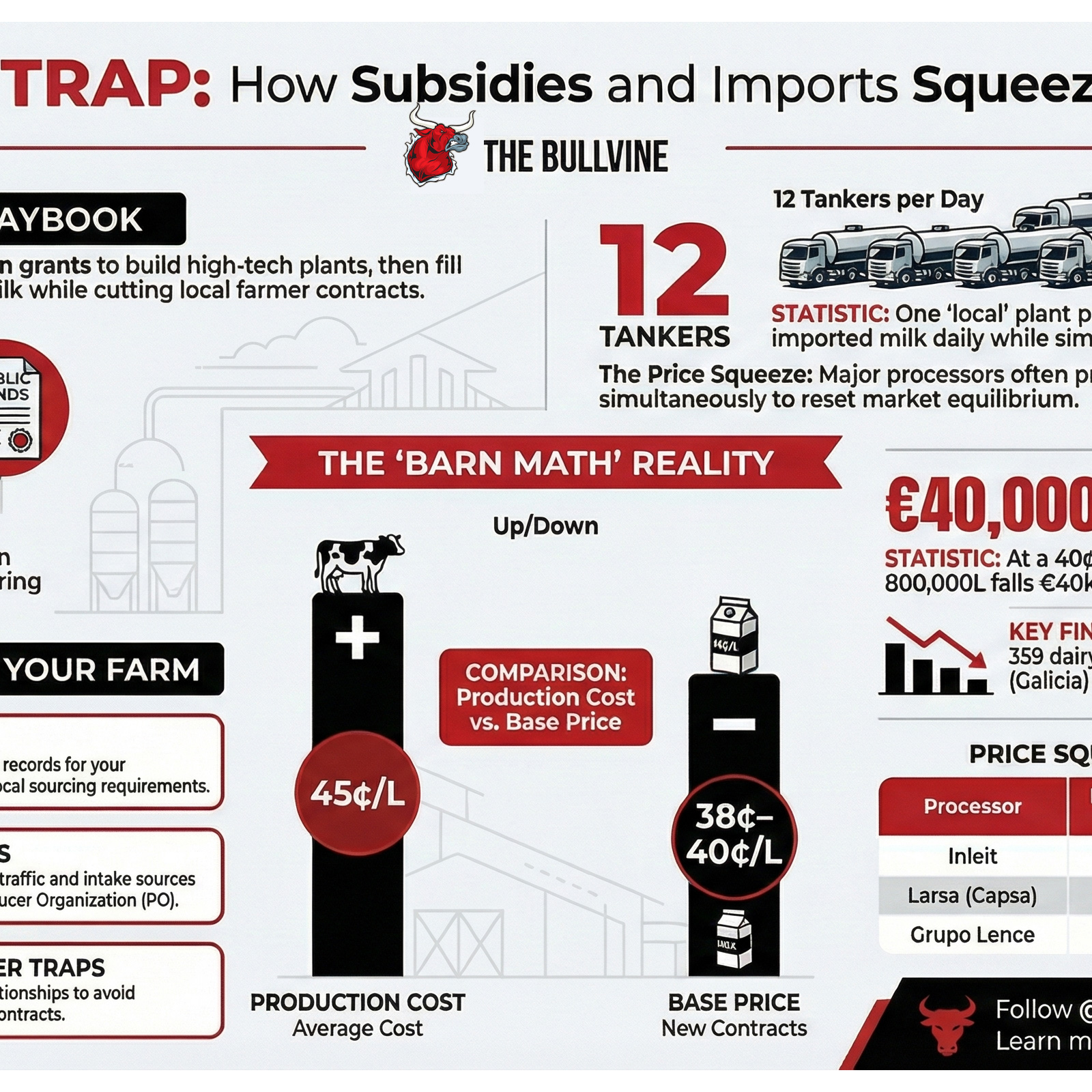
Galician farmers didn't just dump 15,000 litres of Portuguese milk on the pavement — they exposed a processor playbook running across every dairy market: public subsidies build "local" plants, cheaper imports fill them, and your contract gets squeezed 15%. This episode breaks down the €14 million Inleit scandal, the six-processor table of identical 7–9 cent cuts that triggered the protest, and the €40,000 annual hole those prices would carve out of a 100-cow farm. You'll hear why Spain's Food Chain Law keeps failing, how FMMO make-allowances quietly shifted $337 million from US producers to plants, and four checks you can run on your own processor before the next negotiation round.Key Takeaways:How a €14 million subsidized "Galician" plant ended up processing 12 Portuguese tankers daily — and what that means for your own processor's grants.The barn math behind a 15% price cut: €320,000 revenue vs €360,000 costs on a 100-cow herd, leaving €40,000 in the red.Why Food Chain Laws don't work — AICA fines get thrown out, even as courts order cartel compensation from Capsa, Puleva, and Danone.North American parallels: FMMO reforms, TRQs, and subsidized expansions that move millions from milk pools to processors without a single "price cut" line on your cheque.Four 30-day actions: pull grant files, track intake sources, stress-test breakeven, and break single-buyer dependency.Deeper Dive - Why Listen: Óscar Pose from Unións Agrarias counted those 12 tankers himself and called the strategy a deliberate bottom-line play for all of 2026 — not just the next four months. Noelia Rodríguez from Agromuralla pegged costs at 45¢/L against 40¢ offers, while FEGA data shows Galicia's 5,212 farms dropping below 5,000 as smaller operations fold. The episode dissects the six-processor contract table — Inleit's zero-premium base vs Larsa's welfare tiers — and reveals how AICA's €703,000 in Q1 2026 fines vanished on procedural technicalities. You'll get the full FMMO math ($337 million pool revenue transfer in three months) and Canadian TRQ realities, plus actionable checks like auditing public grant terms that could reveal sourcing obligations your processor is quietly ignoring. If you're negotiating contracts, managing a milk pool, or wondering why "local" branding doesn't protect your cheque, this episode hands you the playbook — and the counters.Resources & Engagement: Full article, grant file templates, and breakeven calculator at thebullvine.com/galicia-processor-playbook. Subscribe for weekly episodes on genetics ROI, processor leverage, and farm survival math. Share your processor playbook stories on Twitter @TheBullvine or email edit