About this episode
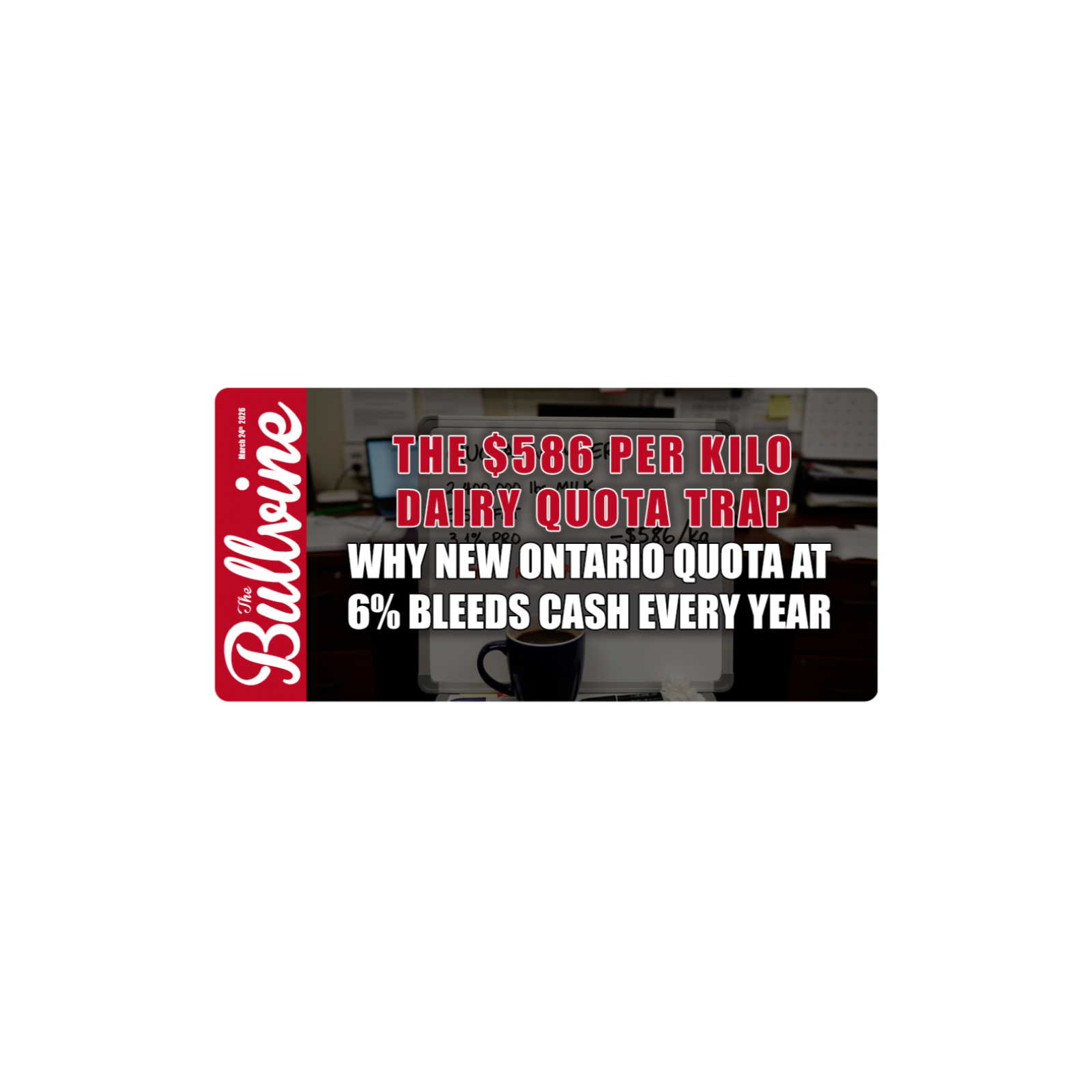
Ontario dairy quota has been sold for years as a “safe” cornerstone asset. But with a hard cap at $24,000/kg and commercial interest rates in the 5.5–6% range, newly financed quota is now quietly bleeding hundreds of dollars per kilogram in annual cash flow. This episode dissects the numbers behind the hype, showing why many expansion and succession plans no longer pencil out—and what progressive producers are doing instead.Key Takeaways:· Why March’s DFO quota exchange—1,908 buyers, 18 sellers, and a cancelled February run—signals a structural problem, not just “tight supply.”· The barn‑level math that proves new Ontario quota at 6% is a negative‑carry asset, and how to calculate the $/kg gap on your own farm.· How the quota price cap freezes capital appreciation and quietly erodes real wealth through inflation, even when milk cheques look stable.· What the Metske v. Metske court decision really means for sweat equity, unwritten family deals, and the next generation’s balance sheet.· How to use DSCR (Debt‑Service Coverage Ratio) and EBITDA splits to see whether your cows are truly profitable or being subsidized by your crops.· Four strategic paths—pay down, hold and optimize, restructure succession, or sell and redeploy—and which operations each one actually fits.· Why upcoming trade pressure and CUSMA review make negative‑carry quota a far bigger risk than most boardroom slide decks admit.This episode takes aim at one of the most protected assumptions in Canadian dairy: that quota is always a safe, wealth‑building asset. Using current DFO exchange data, interest rate levels, and realistic net income per kilogram, the discussion walks through the exact cash‑flow math showing how a $24,000/kg cap and 6% money translate into roughly a $586/kg annual loss on newly financed Ontario quota. Instead of abstract policy talk, you get concrete examples—a 35 kg add‑on that quietly drains more than $20,000 a year, and a 140 kg transfer that leaves the next generation with a DSCR under 0.5 when the bank wants 1.25.For charts, barn‑math cheat sheets, and the full written analysis behind this episode, visit https://www.thebullvine.com/dairy-markets/the-586%e2%80%91per%e2%80%91kilo-dairy-quota-trap-why-new-ontario-quota-at-6-bleeds-cash-every-year/ and look for the Ontario quota debt feature. New episodes of The Bullvine Podcast drop regularly—subscribe on Apple Podcasts so you don’t miss the next deep dive into the genetics, economics, and strategies that actually move your margin. Have thoughts on quota policy, DSCR, or how you’re handling succession under today’s rates? Join the conversation with The Bullvine on Facebook, Instagram, or X and share