About this episode
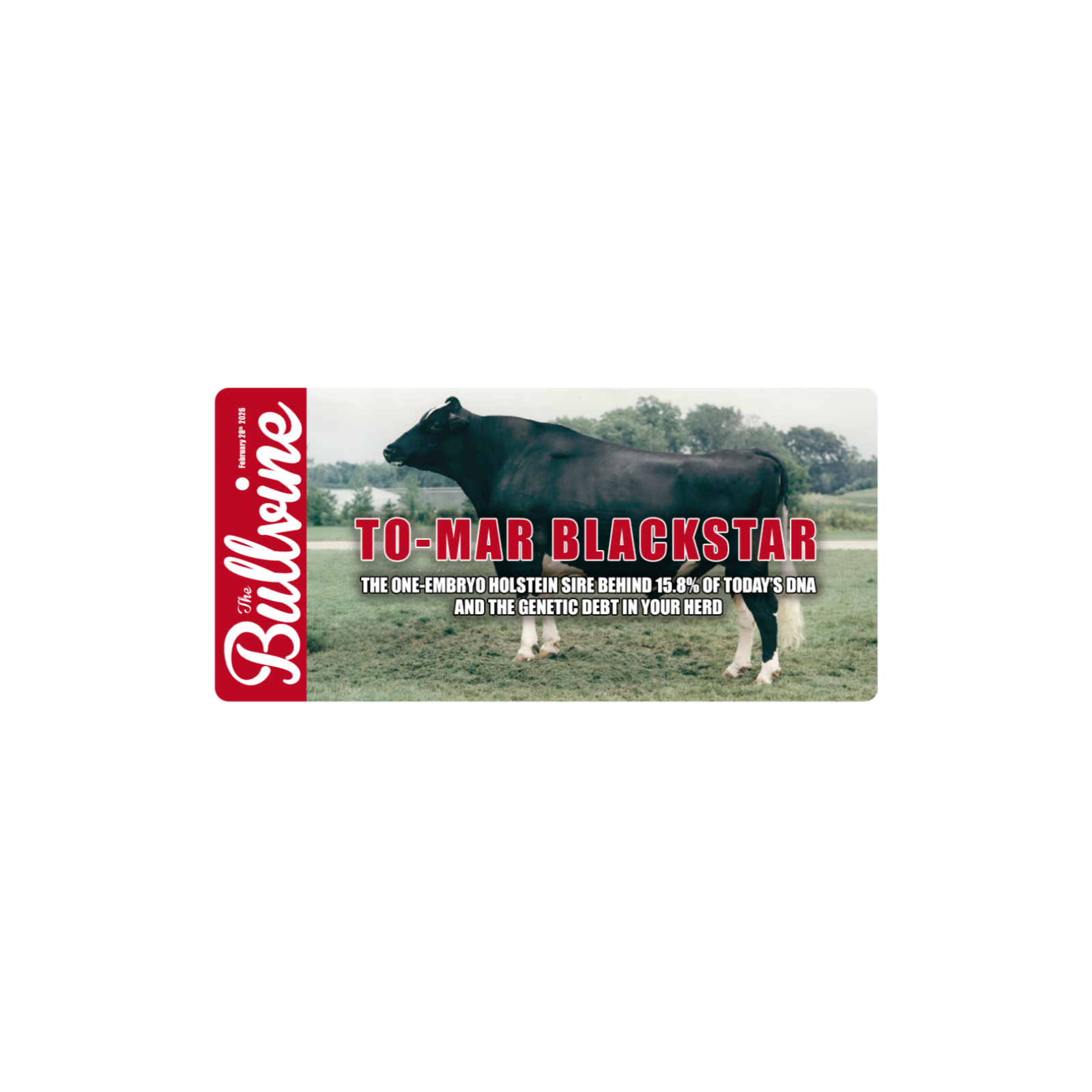
To-Mar Blackstar began as a single embryo on a working Iowa dairy — and became the most related sire in Holstein history. Randy Tompkins flushed one cow, got one pregnancy, and named the coal-black calf that arrived on May 17, 1983, without any sense of what was coming. Nine years later, Blackstar topped the TPI list at 1,256 points, and breeders on three continents were competing for straws before dawn. This is the story behind the name in every pedigree — and the genetic bill your herd is still paying.Key MomentsHow a cow named Hanna — the kind nobody puts on a magazine cover — started a genetic chain that now touches 15.8% of every living HolsteinThe moment Ron Long at Select Sires flagged sire code 7H1897 without knowing whose bull it was — because the daughters were classifying themselvesWhy Blackstar's first proof in 1989 broke the unwritten rule that you picked type bulls or production bulls, but never got bothWhat happened when 2,500 sons were sampled from one sire — roughly half the world's capacity in a given year — and nobody hit the brakesThe daughter-to-Shottle pipeline: how Dixie-Lee Bstar Betsie, a Blackstar daughter, produced Carol Prelude Mtoto, whose son Picston Shottle sold 1.17 million doses and now sits in virtually every elite pedigree aliveWhy This Story MattersYou have seen the name To-Mar Blackstar in pedigrees for decades. What you may not know is that USDA data puts his relationship to the current Holstein breed at 15.8% — higher than Elevation, higher than Chief, higher than any individual sire in documented history. A 1999 Journal of Dairy Science study found his expected inbreeding of future progeny was 7.9%, the highest ever recorded for a Holstein bull. The breed's effective population size has since fallen into a range that conservation biologists flag as at risk. Better tools brought faster concentration, not more diversity. This episode traces how that happened through one bull's extraordinary story.But Blackstar was not a cautionary tale while he was alive — he was the answer. His daughters combined components, udder quality, and productive life in ways the breed had never seen from a single sire. LA-Foster Blackstar Lucy became world production champion. Stookey Elm Park Blackrose classified EX-96 and won Grand Champion at the Royal Winter Fair. His son Emory graduated 50% of his sons to proven status. The Comestar program in Quebec turned three Blackstar daughters into six millionaire AI sires distributed worldwide through Semex. The tension between his brilliance and his concentration cost is the tension the entire breed still lives with today.Continue the JourneyThe full feature article is live at