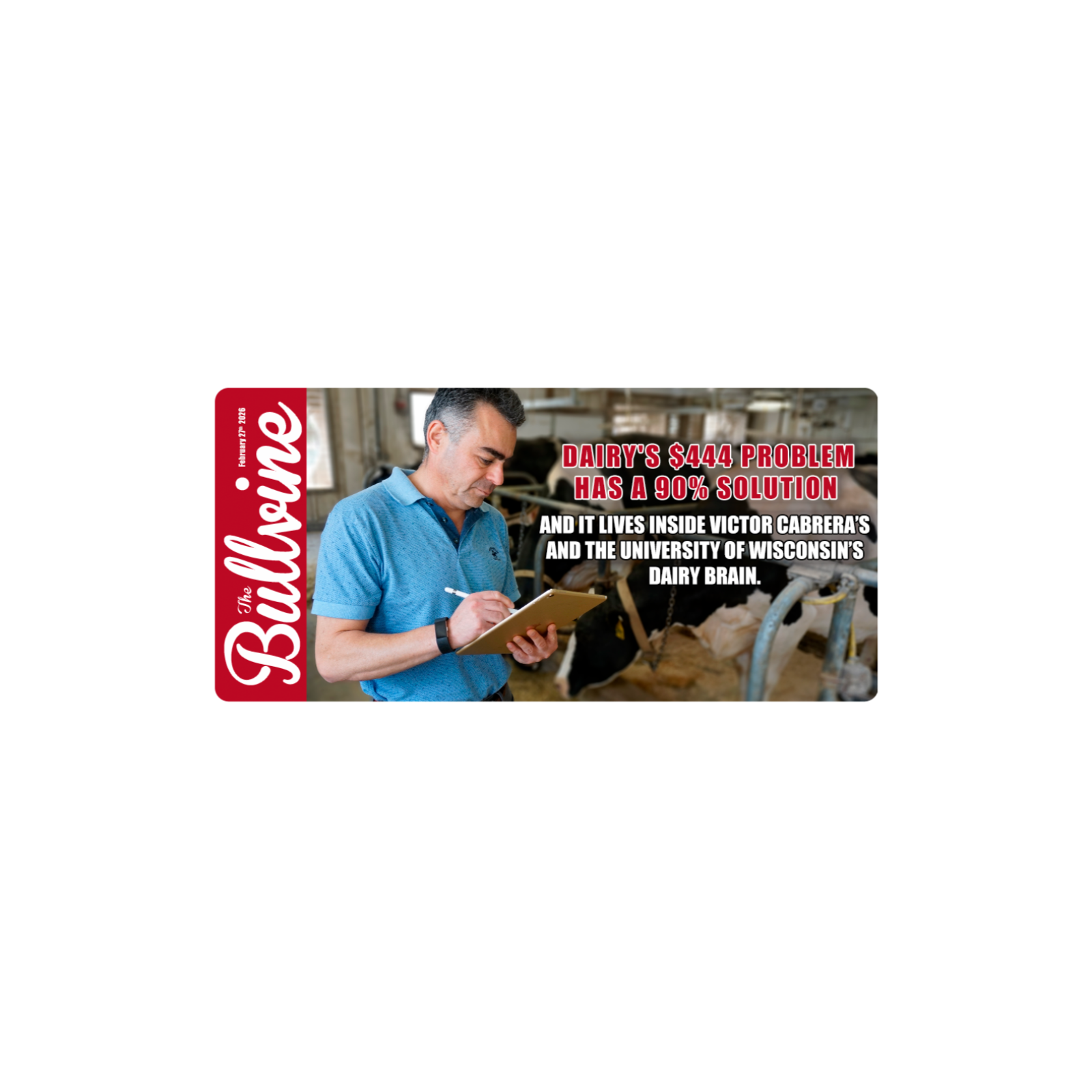
About this episode
Somewhere on a Wisconsin dairy, a cow is about to get mastitis. She looks fine. Her milk's still flowing. Nobody in the parlor suspects a thing. But a system built by a man who once waited months for a single research paper to arrive by mail in Peru already knows — days before any clinical sign appears. Over 90% accuracy. Using data your farm already generates but has never connected. This is the story of Dr. Victor E. Cabrera, the University of Wisconsin–Madison researcher who spent 16 years trying to give dairy farms a brain — and the uncomfortable truth about why a $40 billion industry still can't get five software systems to talk to each other. What he's discovered will change how you think about every data point your operation touches.The Story You'll Hear:The moment a young graduate student from Peru walked into a university where the researchers he'd only read about in worn textbooks were suddenly down the hall — and what that hunger to learn built over the next two decadesWhy the most sophisticated analytics in the world are useless when your milking system, genetics software, and herd management program can't share a single data fieldThe replacement cow gut-punch — the counterintuitive math that proves culling your 50-pound cow today might be the most profitable decision you make this yearWhat happened when his team asked equipment manufacturers for basic API access — and the uncomfortable parallels to how Fortune 500 companies had to drag the tech industry into opennessThe on-farm moment when integrated data caught a silage change impacting feed efficiency in real time — before anyone in the barn noticedWhy beef-on-dairy became a mathematical trap that the industry is still digging out of — and the modeling tool that could have prevented a national heifer shortageThe sustainability paradox most critics get wrong: higher-producing cows actually leave a smaller carbon footprint per unit of milkVictor Cabrera didn't grow up in the North American dairy system. He came from Peru with the kind of appreciation for opportunity that only distance can teach — the perspective of someone who once waited weeks for access to a journal article most of us take for granted. That outsider's lens let him see what insiders couldn't: the dairy industry is drowning in data it can't use. His Dairy Brain project isn't another tech pitch. It's an attempt to solve the fundamental integration problem that costs every farm real money, every day — the five computers in the office that don't talk to each other, the PDF reports that break when someone moves a column, the breeding decisions made on gut feel when 90%-accurate predictions are technically possible. Whether you run 100 cows or 10,000, this conversation forces a hard look at the gap between the data you're generating and the decisions you're actually making with it.The full feature article accom