About this episode
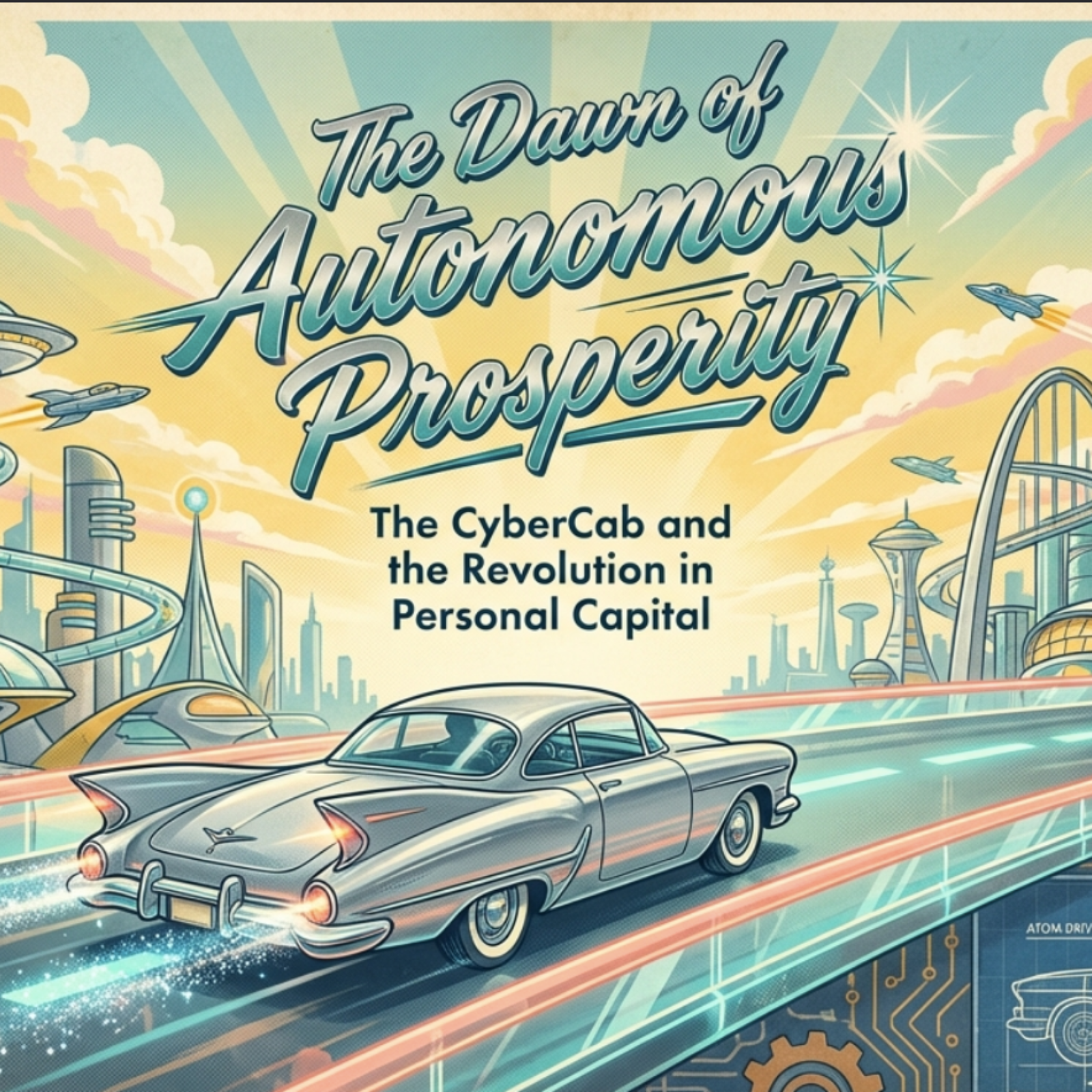
As meticulously chronicled in the 5000 Days Interregnum series, humanity finds itself navigating a pivotal transitional epoch, a liminal space stretching across approximately five millennia of days when artificial intelligence evolves from its embryonic, experimental beginnings toward an era of pervasive, omnipresent integration into every facet of existence. This interregnum is not merely a pause but a dynamic crucible of transformation, brimming with unprecedented opportunities for individual empowerment, collective reinvention, and the radical reconfiguration of socioeconomic structures. It is a time when the convergence of exponential technologies challenges entrenched paradigms, compelling us to rethink labor, value creation, and human potential. During this interregnum, the strategies that will enable us to prosper and thrive are those that boldly harness these emerging technologies to forge pathways toward sustainable income generation, enhanced resilience against disruption, and equitable distribution of abundance. Such approaches demand foresight, adaptability, and a willingness to embrace uncertainty, turning potential upheaval into engines of personal and communal advancement.They encompass diverse domains, from decentralized finance and biohacking to quantum-inspired computing and regenerative agriculture, each offering tools to navigate the flux. Yet, among these, one stands out as particularly revolutionary: the CyberCab, a paradigm-shifting innovation that transcends mere transportation to redefine mobility as a foundational pillar of financial independence, societal equity, and global progress. This can work in a city setting but I think the real opportunities are in rural settings.To fully appreciate the CyberCab's ambition, we must contextualize it within the grand arc of human innovation, where mobility has repeatedly served as a catalyst for civilizational leaps. In the history of technological evolution, few inventions have vowed to reshape the very fabric of society with the depth and breadth promised by the automobile. Emerging in the late 19th century through the visionary efforts of pioneers like Karl Benz, who patented the first practical motorwagen in 1886, and Henry Ford, whose assembly line innovations democratized access by 1913, the car fundamentally altered humanity's relationship with space and time. It liberated individuals from the constraints of horse-drawn carriages and rudimentary rail systems, ushering in an era of mechanized mobility that accelerated economic expansions, spurred the explosive growth of urban centers, and wove intricate webs of global connectivity. Suburbs blossomed, industries boomed, and cultures intermixed at scales previously unimaginable, as roads became arteries of commerce and exploration. However, for over a century, vehicles have persisted as passive instruments—assets that inexorably depreciate, demanding perpetual human oversight in driving, maintenance, and navig