About this episode
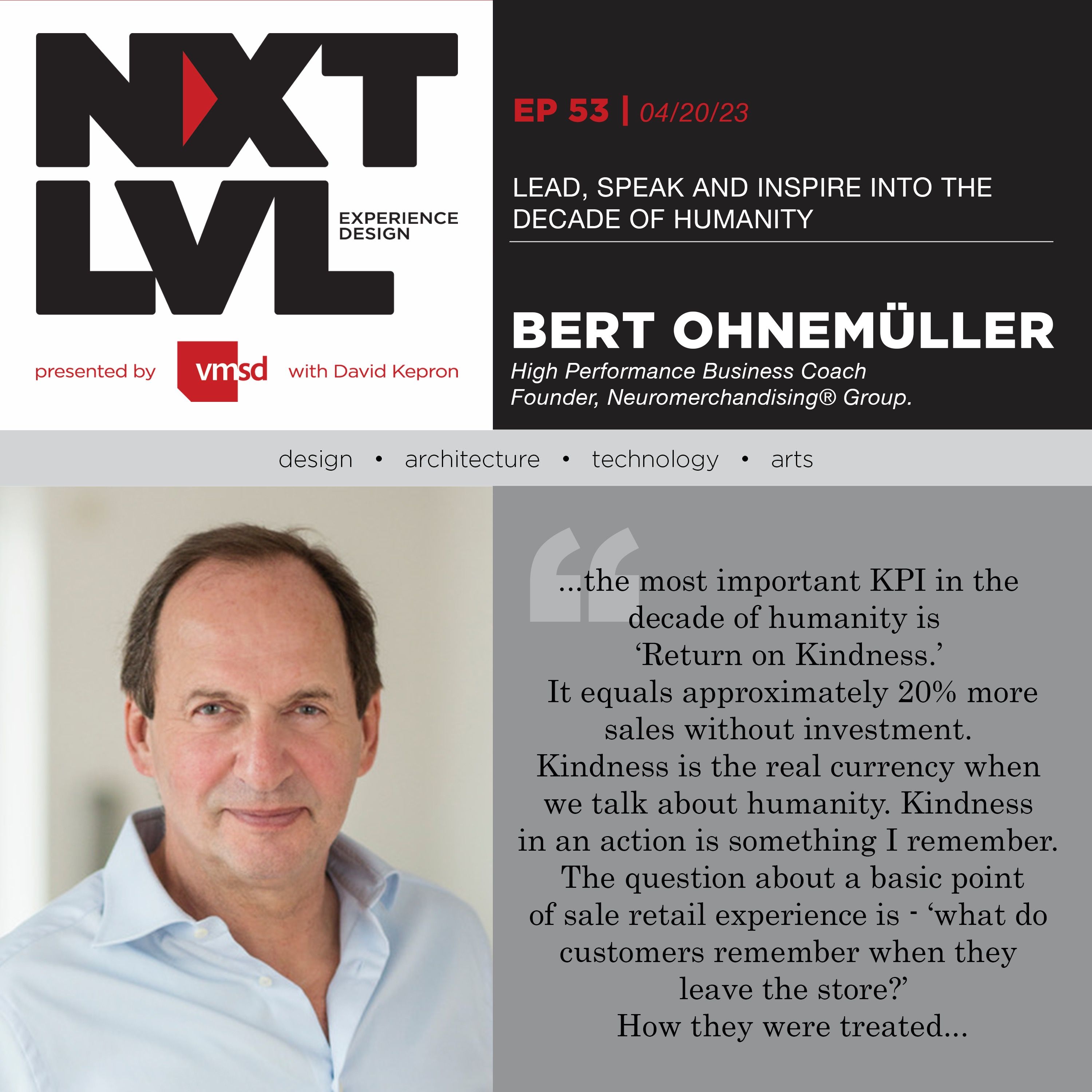
ABOUT BERT MARTIN OHNEMULLER: Bert Martin’s Profile: linkedin.com/in/bert-martin-ohnemüller-bmoWebsites:Personal: bmo.de Company Website: www.neuromerchandising.comPhone: +4915158780680 (Mobile)Address: Kaiserstrasse 61 60329 FrankfurtEmail: bmo@bmo.deTwitter: BertMartin SHOW INTRO:In 2015 I had finished writing my book Retail (r)Evolution and was the world of speaking engagements where I was out spreading the message. Anyone who has written a book will tell you that getting the text published it's just the beginning. The next exciting, though occasionally somewhat tiring, step is to be out on the road speaking at conferences and engaging audiences in the ideas that you had spent the previous two or more years developing and putting to paper.I had the good fortune to be invited to speak at the Shopper Brain Conference in Amsterdam presented by the Neuromarketing Science and Business Association.Speaking at the Shopper Brain Conference was somewhat of a an acid test, a way to be able to gauge whether me - the non-neuroscientist but but the artist, architect, educator and now author, who happened to spend the last four years or so deep diving into the world of neuroscience and its interrelationship with customer behavior and emerging digital technologies, would survive in front of an audience full of scientists and neuromarketing practitioners. My son who I had offered the opportunity to come along on the trip with me would be busy working on homework in the hotel lobby while he was dad was out in front of a few 100 conference attendees talking about the brain, the things you might just want to know about how it works if you're proposing to make engaging customer experiences and the influence that digital technologies was having on both the three pound organ inside your skull and the behavior of shoppers around the globe.I had studied psychology before ente ring the school of architecture at McGill University in Montreal but digging into the world of neuroscience had totally captivated me. I knew that at a base level there was more than just psychology at play in what people did when on a shopping trip. My original intuition was there had to be something, at a base level, that was driving behavior that was maybe crossed generationally, cross culturally, cross ethnically etc similar for all humans. And so, studying neuroscience, brain structures and how things worked inside o