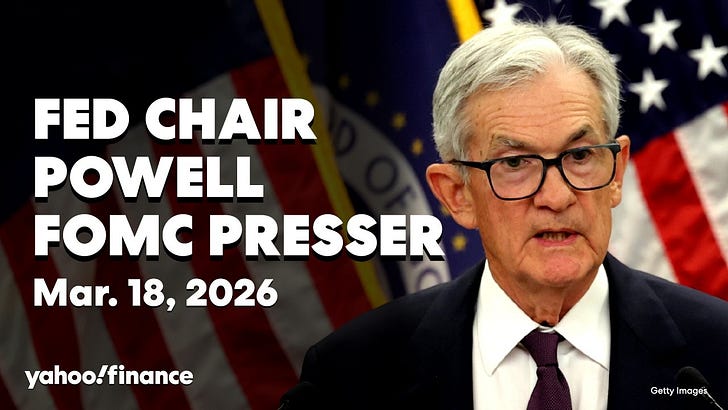
About this episode
The headline video is a summary of below and focuses on the Q&A portion of the presser. Sources for my analysis: * The Video itself* Peter Schiff. * My Brain… human summary by me:* The Fed is being disingenuous about inflation. It is raging as I have been saying all along. The way they calculate inflation between now and 1970s has changed on purpose to promote business confidence* They cannot raise rates even if they want to because of all the debt in the system. The only way they can truly fight inflation by raising rates high enough is AFTER collapse of the economy and stocks. When the pain is so great, everyone begs the government to raise rates to kill inflation* Paul Volcker didn’t prevent inflation…He fought raging inflation after he was given permission to fight it. * So the Fed can still monetize the debt through their back channel operations, but the only sledgehammers they have now are 1) Not cutting is the new raising and 2) cut rates and cause more inflation* Below is a detailed summary using AI of each question, by whom, the reply by Powell and some fact checking. Financial Freedom is not Free, but the Treasure is worth the pursuit!Federal Reserve Press Conference: Q&A Analysis and BriefingThis briefing document provides a comprehensive synthesis of the Question and Answer session following the Federal Reserve’s decision to maintain the federal funds rate. It details the inquiries from various news organizations, the responses provided by Chair Jerome Powell, and an analytical assessment of those responses for factual accuracy, context, and rhetorical tactics.Q&A Session AnalysisNot Your Advisor is a reader-supported publication. To receive new posts and support my work, consider becoming a free or paid subscriber.Detailed Focus: Stagflation and Inflation DefinitionsA significant portion of the Q&A focused on whether the US economy is entering a period of “stagflation”—a combination of stagnant economic growth and high inflation.Powell’s Definition vs. Historical ContextChair Powell explicitly rejected the “stagflation” label for the current economic environment. He argued that the term is reserved for the extreme conditions of the 1970s, characterized by:* Double-digit unemployment.* Extremely high inflation.* A very high “Misery Index” (the sum of the unemployment and inflation rates).Powell’s Argument: He contrasted the 1970s with current data:* Unemployment: 4.4% (near longer-run normal).* Inflation: Approximately 3% (one percentage point above target).* Growth: Real GDP projected at 2.4%.Powell concluded that while there is “tension”