About this episode
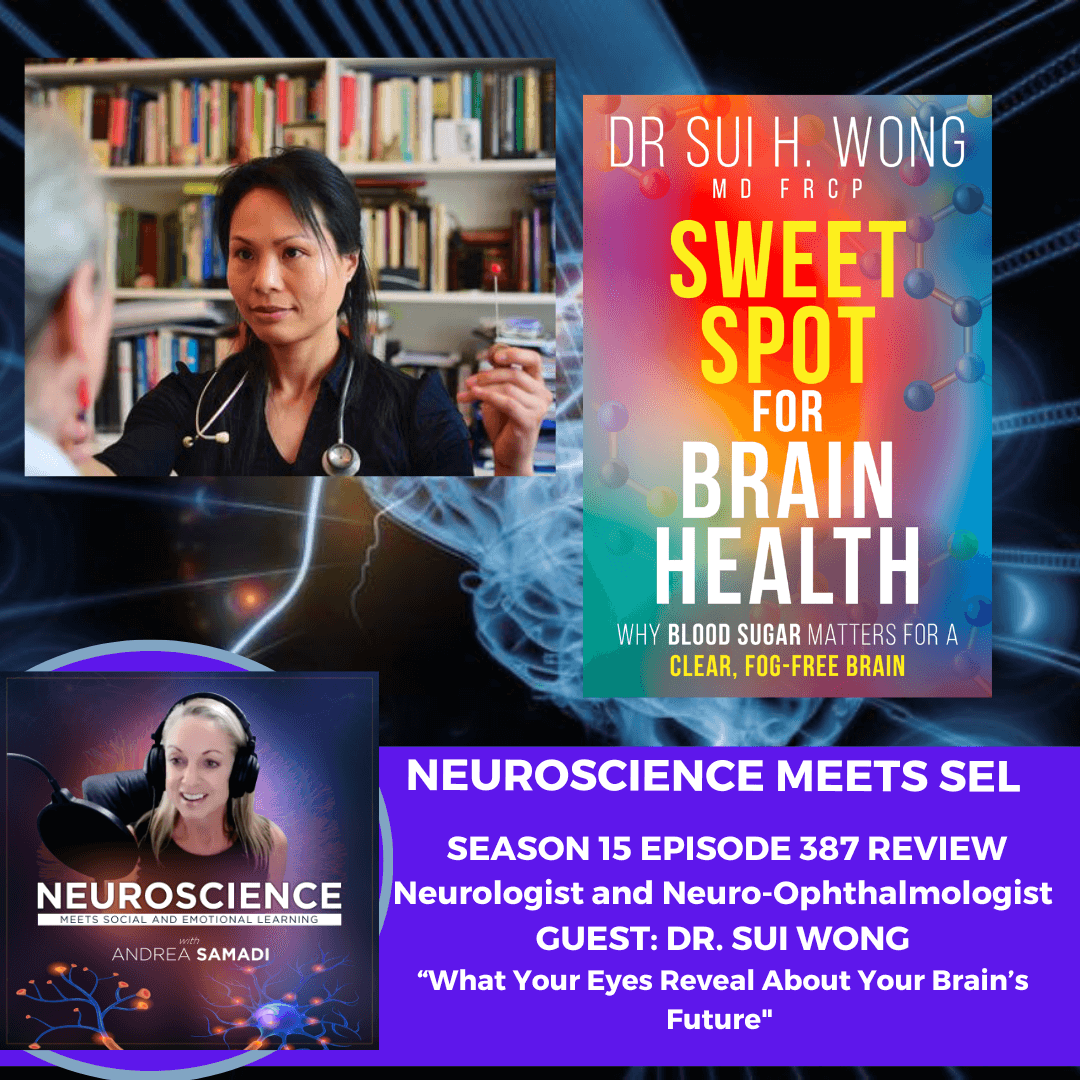
This episode revisits Dr. Sui Wong’s insights on how the eyes are neural tissue that can reveal early signs of brain, vascular, and metabolic issues, and reframes migraine as a common, often invisible neurological condition that causes brain fog and cognitive symptoms.
Actionable takeaways include scheduling regular dilated eye exams, stabilizing blood sugar, prioritizing sleep and retinal blood flow, reducing digital strain, and tracking migraine triggers to prevent worsening symptoms.
In today's review of EP 342 with Dr. Sui Wong from August 2024, we cover:
• Why the eyes are considered an extension of the brain — and how the retina is neural tissue
• How eye exams may provide early insight into overall neurological and vascular health
• What drusen are, why small amounts can be age-related, and why monitoring retinal changes matters
• The powerful idea that prevention begins before symptoms become severe
• Why migraine is not “just a headache,” but a neurological condition affecting 1 in 7 people globally
• The hidden symptoms of migraine — including brain fog, mood changes, word-finding difficulty, and cognitive slowing
• Why migraine is a leading cause of disability in young women and often goes unrecognized
• The connection between blood sugar regulation, sleep, stress, and neurological function
• Practical ways to support long-term brain health through awareness, monitoring, and daily lifestyle habits
• How small, consistent actions build cognitive resilience over time
Welcome back to Season 15 of the Neuroscience Meets Social and Emotional Learning Podcast.
I’m Andrea Samadi, and here we bridge the science behind social and emotional learning, emotional intelligence, and practical neuroscience—so we can create measurable improvements in well-being, achievement, productivity, and results.
When we launched this podcast seven years ago, it was driven by a question I had never been taught to ask—
not in school,
not in business,
and not in life:
If results matter—and they matter now more than ever—how exactly are we using our brain to make these results happen?
Most of us were taught what to do.
Very few of us were taught how to think under pressure,
how to regulate emotion,
how to sustain motivation,
or even how to produce consistent results without burning out.
That question led me into a deep exploration of the mind–brain–results connection—and how neuroscience applies to everyday decisions, conversations, and performance.
That’s why this podcast exists.
Each week, we bring you leading experts to break down complex science and translate it into practical strategies you can apply immediately.
When the brain, body, and emotions are aligned, performance stops feeling forced—and starts to feel sustainable.
Season 14 showed us what alignment looks like in