About this episode
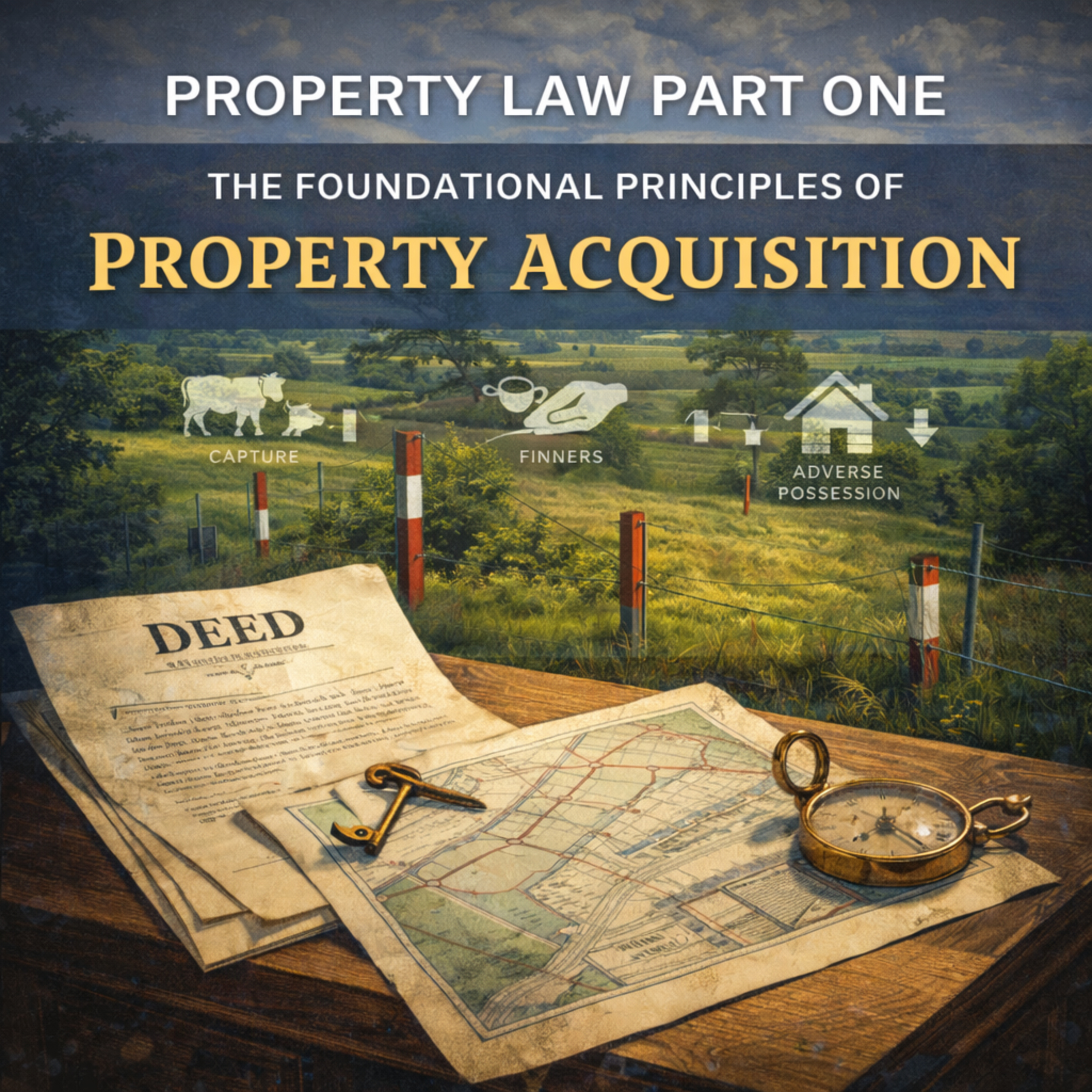
This conversation delves into the foundational aspects of property law, exploring the principles of ownership, the rule of capture, the rights of finders, adverse possession, and the nuances of voluntary transfers. The discussion emphasizes the importance of understanding these legal doctrines, not just for law students but for anyone interested in the bedrock of property rights in society. Ever wonder how something becomes legally yours? From hunting foxes in 1805 to modern digital assets, the core question remains: how does a person take a physical thing and turn it into their property? This episode uncovers the foundational principles behind property ownership, revealing the ancient rules, key doctrines, and policy voices that shape what we can and cannot claim. Whether you're a law student gearing up for exams or anyone curious about the hidden logic governing ownership, this deep dive unpacks the rules that turn effort into rights, loss into ownership, and gifts into legally enforceable transfers.Start with the classic scenario of the 1805 fox hunt—a battle between labor and certainty, illustrating that mere pursuit isn't enough for property rights; control and actual capture matter. Learn how courts prioritize clear standards to prevent chaos, balancing efficiency and stability, with real-world parallels to oil drilling and whale hunting. We analyze landmark cases, like Pearson v. Post, to show how courts resolve conflicts in resource capture—highlighting the policy tensions of reward for effort versus interference and fairness. Discover how industry customs can override strict rules, ensuring that valuable industries like whaling or oil extraction continue thriving.Next, explore the law of finders—what happens when you stumble upon a lost wallet or a buried treasure. We break down the hierarchy of lost, mislaid, abandoned, and treasure trove property, illustrating how public order and return prospects influence who wins. See how the law protects the landowner’s rights in private spaces but favors finders elsewhere, emphasizing the policy of facilitating recovery for owners.One of the most mind-blowing doctrines—adverse possession—reveals how long-term use can turn trespass into ownership. Understand the five key elements: actual, open and notorious, exclusive, hostile, and continuous use. We reveal the policy: rewarding land use and punishing neglect, even at the expense of moral instincts. Dive into intricate rules about tacking, privity, and disabilities—where timing and state of mind determine whether a squatter can claim the land after years of possession.Finally, we uncover how property is transferred voluntarily through gifts—an area fraught with legal subtlety and potential fraud. Unpack the three essential elements: donative intent, delivery, and acceptance. See how courts require physical handover or equivalents to prevent abuse, and how super strict standards aim to preserve clarity and trust