About this episode
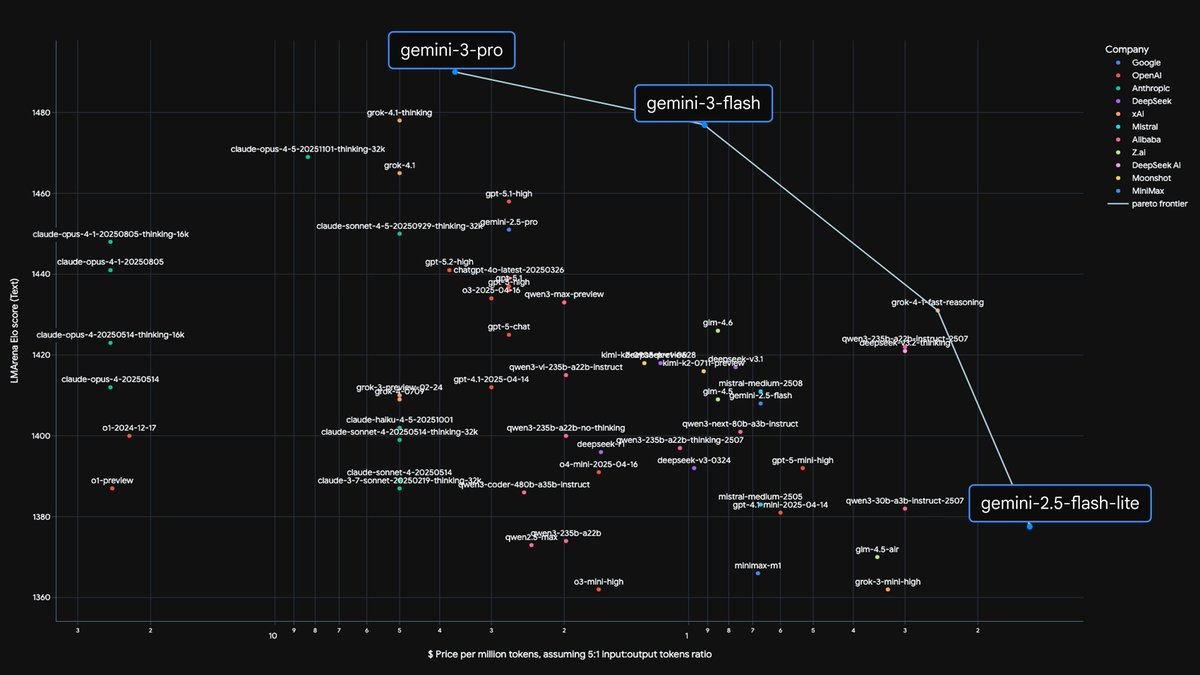
From rewriting Google’s search stack in the early 2000s to reviving sparse trillion-parameter models and co-designing TPUs with frontier ML research, Jeff Dean has quietly shaped nearly every layer of the modern AI stack. As Chief AI Scientist at Google and a driving force behind Gemini, Jeff has lived through multiple scaling revolutions from CPUs and sharded indices to multimodal models that reason across text, video, and code.Jeff joins us to unpack what it really means to “own the Pareto frontier,” why distillation is the engine behind every Flash model breakthrough, how energy (in picojoules) not FLOPs is becoming the true bottleneck, what it was like leading the charge to unify all of Google’s AI teams, and why the next leap won’t come from bigger context windows alone, but from systems that give the illusion of attending to trillions of tokens.We discuss:* Jeff’s early neural net thesis in 1990: parallel training before it was cool, why he believed scaling would win decades early, and the “bigger model, more data, better results” mantra that held for 15 years* The evolution of Google Search: sharding, moving the entire index into memory in 2001, softening query semantics pre-LLMs, and why retrieval pipelines already resemble modern LLM systems* Pareto frontier strategy: why you need both frontier “Pro” models and low-latency “Flash” models, and how distillation lets smaller models surpass prior generations* Distillation deep dive: ensembles ? compression ? logits as soft supervision, and why you need the biggest model to make the smallest one good* Latency as a first-class objective: why 10–50x lower latency changes UX entirely, and how future reasoning workloads will demand 10,000 tokens/sec* Energy-based thinking: picojoules per bit, why moving data costs 1000x more than a multiply, batching through the lens of energy, and speculative decoding as amortization* TPU co-design: predicting ML workloads 2–6 years out, speculative hardware features, precision reduction, sparsity, and the constant feedback loop between model architecture and silicon* Sparse models and “outrageously large” networks: trillions