About this episode
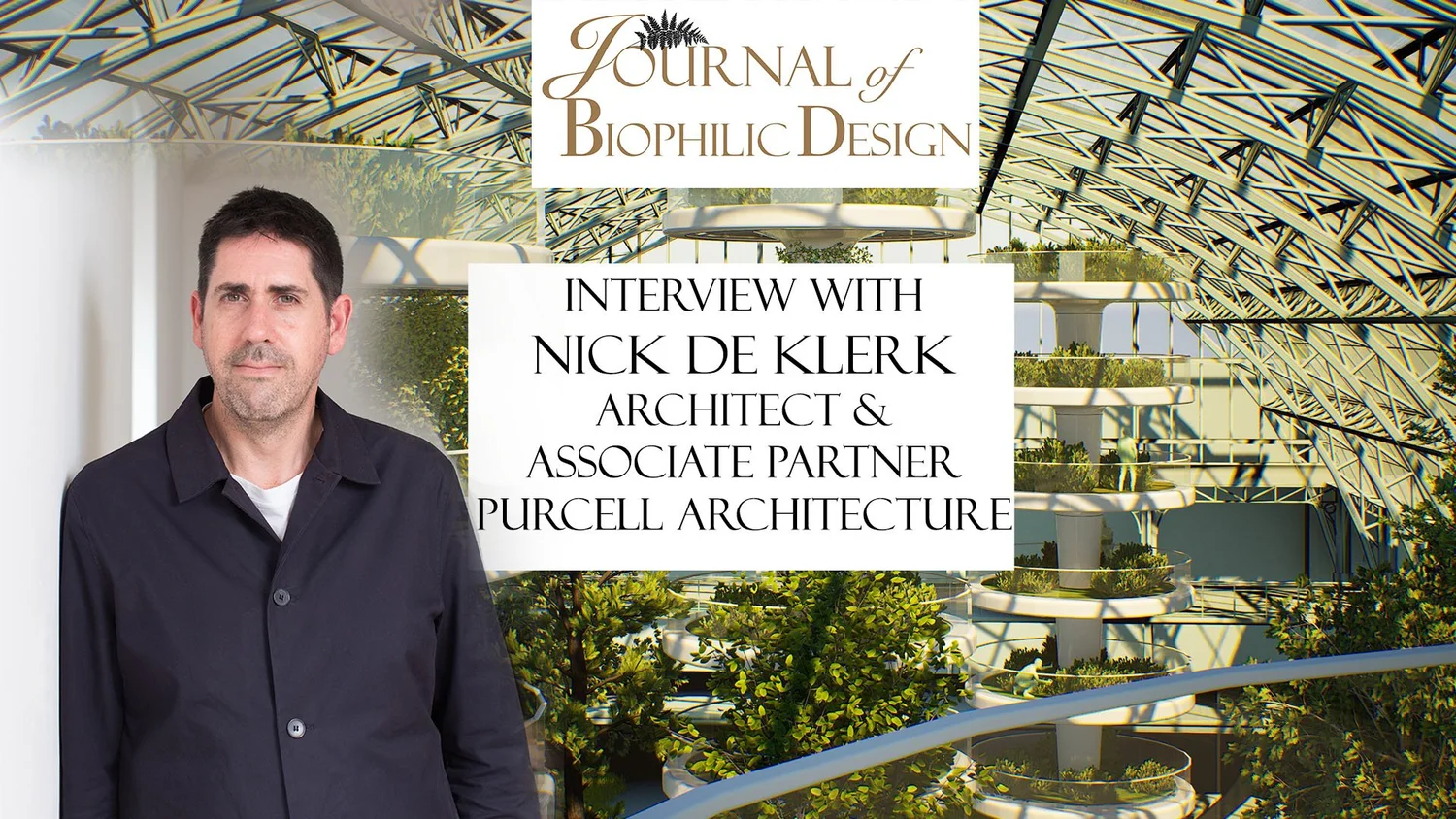
In a world increasingly disconnected from nature, architects like Nick De Klerk are pioneering a transformative approach to design that reconnects humans with their fundamental need for natural environments. "Access and proximity to nature are a basic human need," Nick emphasizes, drawing from his childhood experiences growing up close to nature.Biophilic design is about creating moments of awe, surprise and wonder. Nick describes these as "unexpected transitions" that take your breath away - moving from a constrained, dark space into a light-filled, plant-abundant area that immediately transforms your sensory experience. These moments of awe are critical, creating what he calls a "transformational experience" where people don't just occupy a space, but are fundamentally changed by it.We also talk about how we can preserve Heritage while embracing nature. The key to sustainable design lies in respecting existing structures. "The greenest building is one that already exists," Nick quotes, highlighting Purcell Architects' philosophy of working with heritage buildings. Their approach isn't about wholesale replacement, but sensitive enhancement - improving thermal performance, integrating natural elements, and maintaining the building's historical character.I wanted to explore also, the hotel concept they created for HIX, the Hotel Interiors Experience trade show. Nick and his team developed a concept around the idea of integrating food production, sustainability, and hospitality within a historic agricultural hall. They imagined this beautiful historical building transformed into a living, breathing space where guest rooms overlook a lush interior landscape. Vertical farming, natural light, and community spaces merge to create an environment that reconnects people with food production and natural cycles creating not just a sensory experience but also a community connection. It's about creating spaces that are "not just practical, but experiential" - where texture, light, and living elements combine to create profound human experiences. "People want to learn something or feel they've benefited from a space," he explains.When asked to imagine a world transformed by biophilic design, with a “magic