About this episode
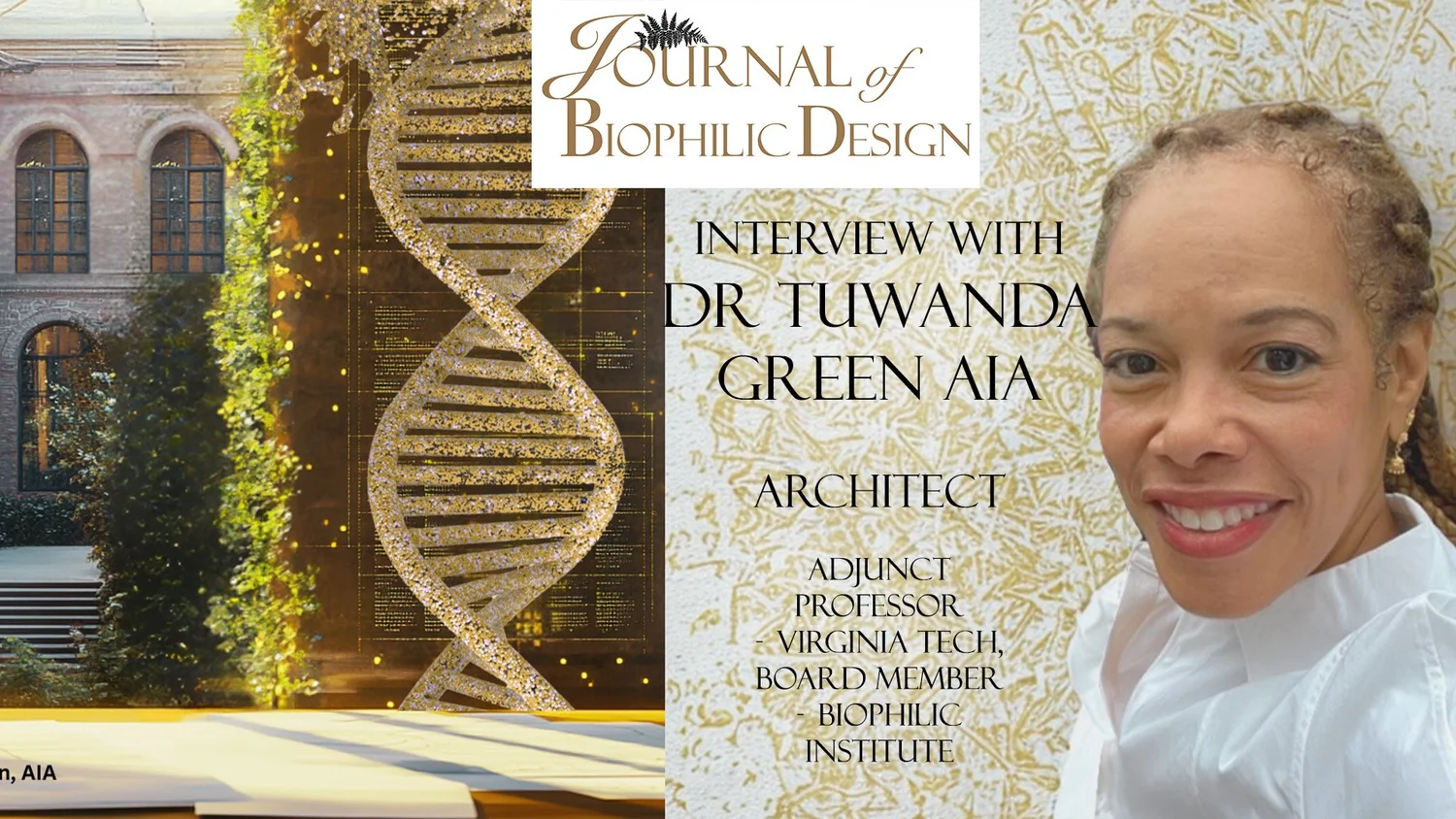
Architects are increasingly recognising that our built environments do more than shelter us—they fundamentally shape our physical and mental wellbeing. Dr Tuwanda Green, a leading expert in biophilic design, an architect, and who sits on the board of the Biophilic Institute, has over 32 years of architectural experience including working for government design projects, and holds a doctorate in architecture from Virginia Tech. She argues that thoughtfully designed spaces using the principles of Biophilia can actually alter our genetic expression and improve generational health.Tuwanda is an expert on Epigenetics—a field of genetic research. In our conversation she explains how environmental factors can switch genes on and off without changing DNA sequences. Think of epigenetic markers like "gumballs" stuck to our genetic code, potentially influencing everything from stress responses to disease susceptibility."These markers can be passed down through generations," explains Tuwanda. "A stressful, nature-deprived environment could potentially transmit negative genetic expressions to our children, while nurturing, nature-connected spaces might help reverse these markers."Recent scientific studies support this perspective. Research has consistently demonstrated that exposure to green spaces correlates with significant health improvements:- Reduced cardiovascular disease risks- Lower blood pressure- Decreased stress hormone levels- Improved cognitive function- Enhanced mental health and emotional regulationIn our Journal of Biophilic Design podcast and the articles in the Journal itself, we often talk about how green spaces aren't just aesthetic additions—they're critical health interventions. Tuwanda here, shares that by incorporating natural elements like water features, organic shapes, natural lighting, and plant life, architects can create environments that actively support human physiological and psychological functioning.T