About this episode
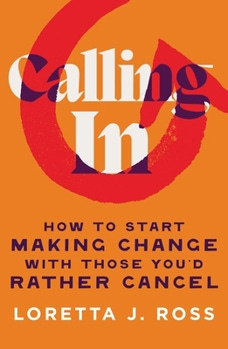
We’ve been looking at shame this month. Is it always a bad thing? And what’s the difference between shame and accountability?In our polarized society, sometimes it feels like we have two choices: you can be a squishy liberal who loves everyone and passively tolerates everything, or you can be a merciless conservative who longs to inflict draconian punishments in an attempt to control the behavior of others.But the more I’ve been thinking about it, the more I think love and accountability are two things that have to live in tension. Heretic Hereafter is a reader-supported publication. To receive new posts and support my work, consider becoming a free or paid subscriber.Two books are currently influencing my thinking on this topic: Calling In by Loretta Ross, and The Power of Parting by Eamon Dolan. Ross talks about the importance of relationship building and gentleness when confronting others (“calling in” vs. “calling out”) while Dolan stresses that we need not tolerate abusive behavior, even and especially from those closest to us.Both authors, I think, hold this tension: that we can love people and treat their mistakes with kindness while refusing to tolerate ongoing abuse. They insist on giving people chances to change, but not an infinite amount. We can have limits and compassion.What would this kind of compassionate accountability look like? An example (though an imperfect one) might be something that happened in my church as I was growing up. It’s an incident with a man I’ll call “Paul.” (I’ve changed names and identifying details in this story.)Paul had an advanced degree but worked in a public service capacity with vulnerable youth. Let’s say he was a lawyer who worked in the family court system with runaway teens. Paul was well-liked and served in several capacities in church leadership, including as a youth group leader when I was in high school. I regularly babysat Paul’s kids and he drove me home several times. I found Paul funny and charming. But sometimes our interactions had a weird vibe I couldn’t quite put my finger on. He was maybe a little overly familiar, treating us youth group kids more like peers than children. To be honest, part of me was thrilled: what teen doesn’t want to feel more grown up? But another part was wary.