About this episode
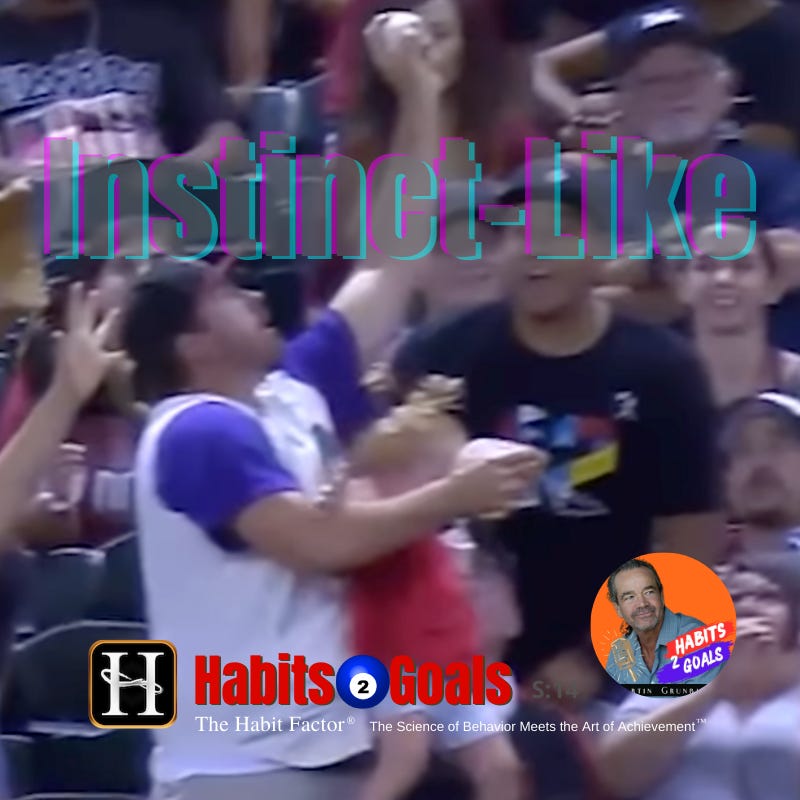
Be among the first to get your hands on the Unified Behavior Model™ white paper.Subscribe now"Fear is both instinctive and learned—wired for survival, but shaped by experience and environment."Is fear learned or hardwired?Yes. It’s both.Fear is instinctual—wired into our survival.It’s also learned—shaped by experience, memory, and environment.A seasoned coach posted after reading a neuroscience study:“Is fear learned or ingrained?”I couldn’t help but reply:“Coach… it’s BOTH!”And that opens the door for this convo ?If fear is innate and trained,Why do we treat skills and habits like they’re either/or?ShareHabits vs. Skills? Same Blueprint.“Bad habits happen on their own; Good habits happen when planned.”Intentional habits grow like skills—through the same four levels of learning.1. Unconscious IncompetenceYou don’t even know you suck. (Yet.)2. Conscious IncompetenceYou do know—and it stings. But you keep showing up.3. Conscious CompetenceYou’ve got it, but it takes mental effort. Progress.4. Unconscious CompetenceIt’s automatic. Habit-like. Reflexive. Feels like instinct.The Viral “Baseball Dad” MomentBaby in left arm. Beer in his right hand.Outfielder tosses ball into the stands.He lets go of the baby…Not the beer.Snags the ball barehanded with his left hand.Catches the baby with his left arm on the way down.Barely spills his beer.Instinct-like? You bet.Skill? 100% Forged via the habit of laying the game.He didn’t hesitate.Most people call that instinct.But really? It was years of trained reflexes, built through intentional practice.Without that practice? He might’ve flinched. Frozen.Fear might’ve even jeopardized the baby.Instead—Unconscious Competence.Relaxed. Confident. Focused.Preparedness displaces panic.Practice overrides pressure.That’s the real lesson: Decades of muscle memory—Intentional reps, delivering in an instant.Subscribe nowThe P-A-R-R CycleBehavior change isn't magic—it’s a method.And, it doesn’t come via “HABIT LOOPS”It comes from int