About this episode
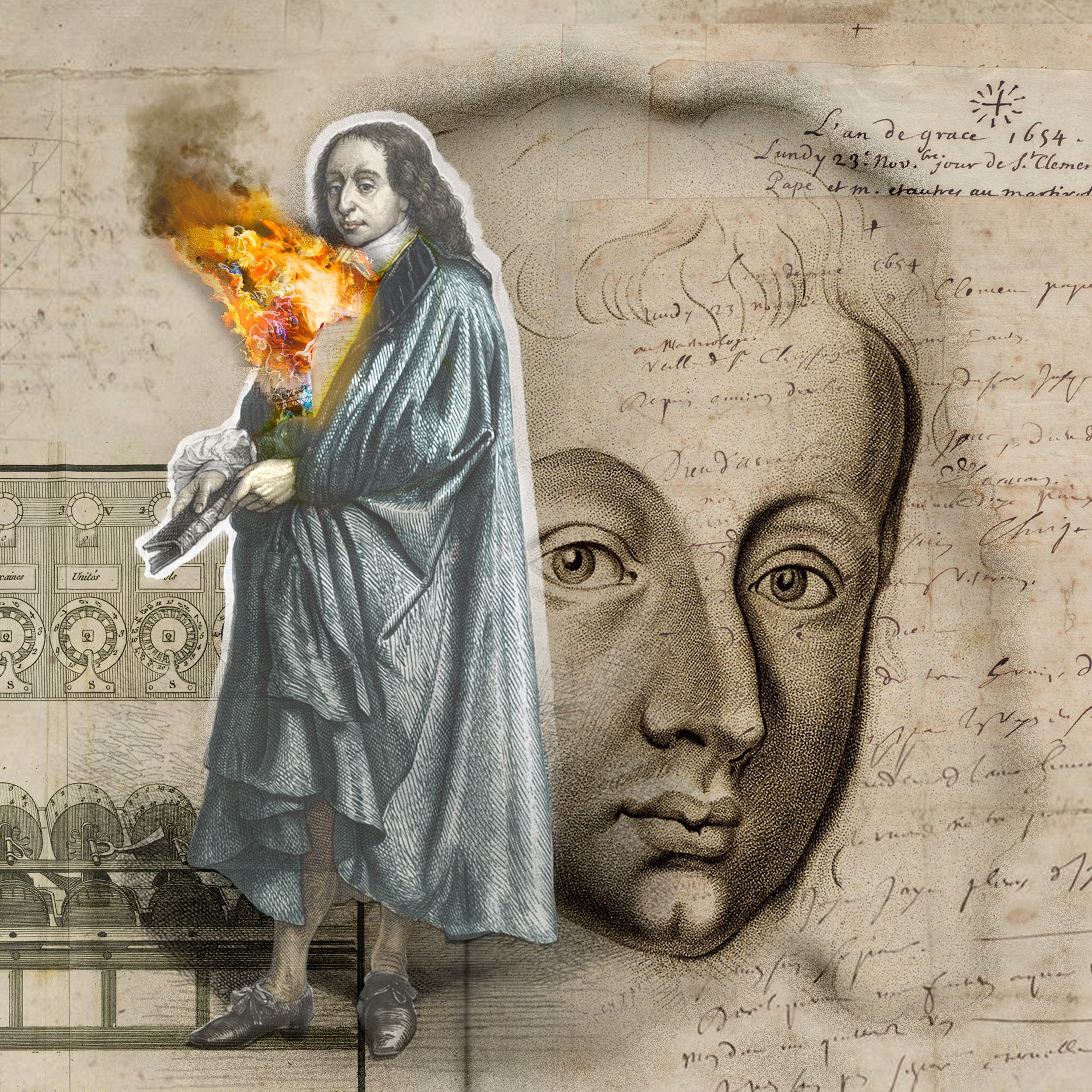
“Our longings are much more powerful than our logic, and our desires are stronger than our reason.” (Graham Tomlin on the thought of Blaise Pascal)The Rt. Rev. Dr. Graham Tomlin (St. Mellitus College, the Centre for Cultural Witness) joins Evan Rosa for a sweeping exploration of Blaise Pascal—the 17th-century mathematician, scientist, philosopher, and theologian whose insights into human nature remain strikingly relevant. Tomlin traces Pascal’s life of brilliance and illness, his tension between scientific acclaim and radical devotion, and his deep engagement with Descartes, Montaigne, and Augustine. The conversation moves through Pascal’s analysis of self-deception, his critique of rationalism and skepticism, the transformative Night of Fire, his compassion for the poor, and the wager’s misunderstood meaning. Tomlin presents Pascal as a thinker who speaks directly to our distracted age, revealing a humanity marked by greatness, misery, and a desperate longing only grace can satisfy.This episode was made possible in part by the generous support of the Tyndale House Foundation. Visit tyndale.foundation to learn more.Episode Highlights“Our longings are much more powerful than our logic, and our desires are stronger than our reason.”“The greatness and the refuse of the universe—that’s what we are. We’re the greatest thing and also the worst thing.”“If everybody knew what everybody else said about them, there would not be four friends left in the world.”“Only grace can begin to turn that self-oriented nature around and implant in us a desire for God.”“The reason you cannot believe is not because of your reason; it’s because of your passions.”Show NotesGraham Tomlin introduces the Night of Fire and Pascal’s meditation on “the greatness of the human soul”Evan Rosa frames Pascal as a figure of mystery, mechanics, faith, and modern technological influence.Tomlin contrasts Pascal with Descartes and Montaigne—rationalism vs. skepticism—locating Pascal between their poles.Pascal’s awareness of distraction, competition, and “all men naturally hate each other” surfaces early as a key anthropological insight.Evan notes Nietzsche’s striking admiration: “his blood runs through my veins.”Tomlin elaborates on Pascal’s lifelong tension between scientific achievement and spiritual devotion.The story of the servant discovering the hidden Night of Fire parchment in Pascal’s coat lining is recounted.Tomlin reads the core text: “Joy, joy, joy, tears of joy… Let me never be separated from him.”Pascal’s distinction: “God of Abraham, God of Isaac, God of Jacob, not of the philosophers.”Discussion of Jansenism, Augustinian anthropology, and the gravity of human fallenness.Tomlin sets the philosophical context