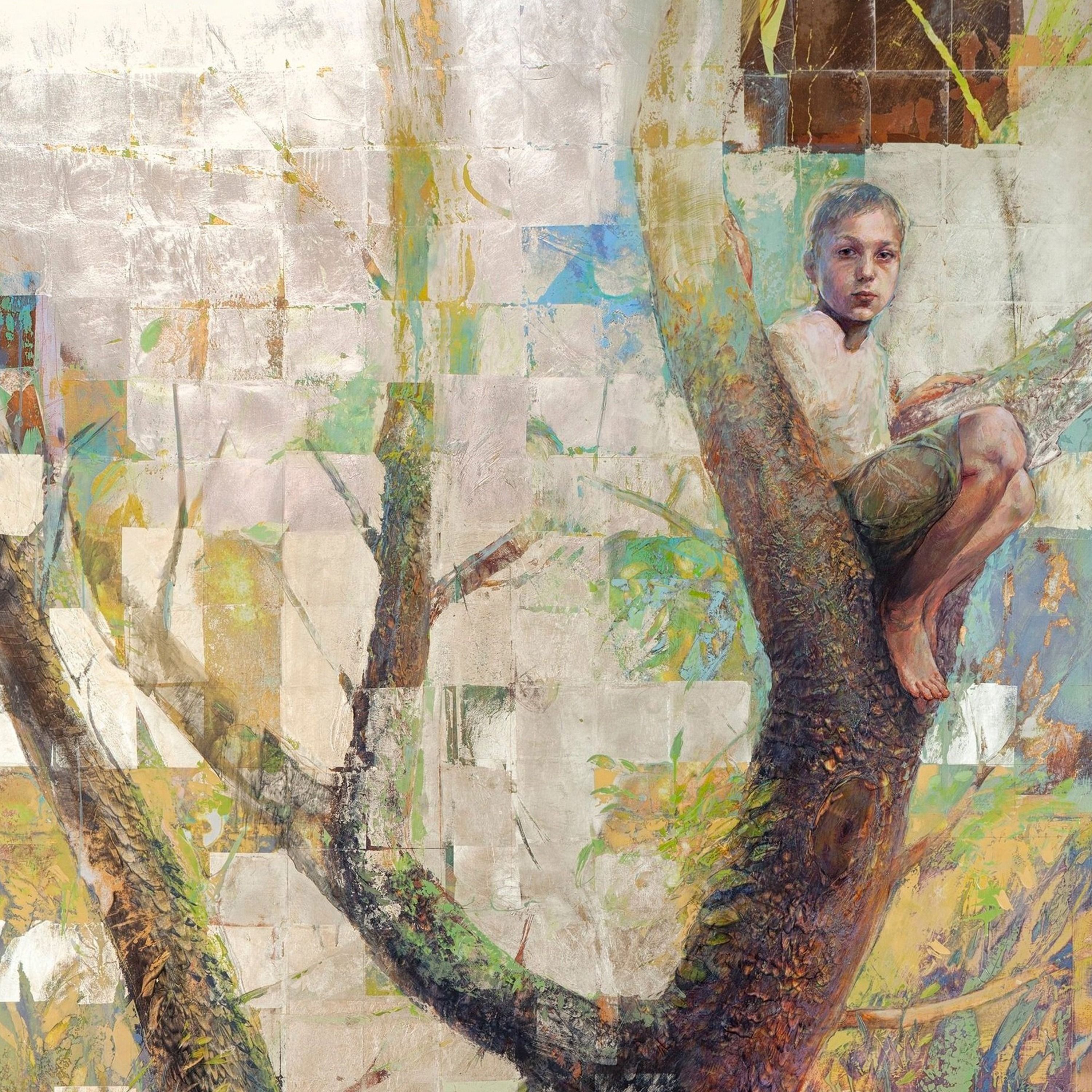
About this episode
“Art is a form of prayer … a way to enter into relationship.”Artist and theologian Bruce Herman reflects on the sacred vocation of making, resisting consumerism, and the divine invitation to become co-creators. From Mark Rothko to Rainer Maria Rilke, to Andres Serrano’s “Piss Christ” and T.S. Eliot’s Four Quartets, he comments on the holy risk of artmaking and the sacred fire of creative origination.Together with Evan Rosa, Bruce Herman explores the divine vocation of art making as resistance to consumer culture and passive living. In this deeply poetic and wide-ranging conversation—and drawing from his book *Makers by Nature—*he invites us into a vision of art not as individual genius or commodity, but as service, dialogue, and co-creation rooted in love, not fear. They touch on ancient questions of human identity and desire, the creative implications of being made in the image of God, Buber’s I and Thou, the scandal of the cross, Eliot’s divine fire, Rothko’s melancholy ecstasy, and how even making a loaf of bread can be a form of holy protest. A profound reflection on what it means to be human, and how we might change our lives—through beauty, vulnerability, and relational making.Episode Highlights“We are made by a Maker to be makers.”“?I think hope is being stolen from us Surreptitiously moment by moment hour by hour day by day.”“There is no them. There is only us.”“The work itself has a life of its own.”“Art that serves a community.”“You must change your life.” —Rilke, recited by Bruce Herman in reflection on the transformative power of art.“When we're not making something, we're not whole. We're not healthy.”“Making art is a form of prayer. It's a form of entering into relationship.”“Art is not for the artist—any more than it's for anyone else. The work stands apart. It has its own voice.”“We're not merely consumers—we're made by a Maker to be makers.”“The ultimate act of art is hospitality.”Topics and ThemesHuman beings are born to create and make meaningArt as theological dialogue and spiritual resistanceCreative practice as a form of love and worshipChristian art and culture in dialogue with contemporary issuesPassive consumption vs. active creationHow to engage with provocative art faithfullyThe role of beauty, mystery, and risk in the creative processArt that changes you spiritually, emotionally, and intellectuallyThe sacred vocation of the artist in a consumerist worldHow poetry and painting open up divine encounter, particularly in Rainer Maria Rilke’s “Archaic Torso of Apollo”Four Quartets and spiritual longing in modern poetryHospitality, submission, and service as aesthetic posturesModern culture's sickness and art as medicineEncountering the c