About this episode
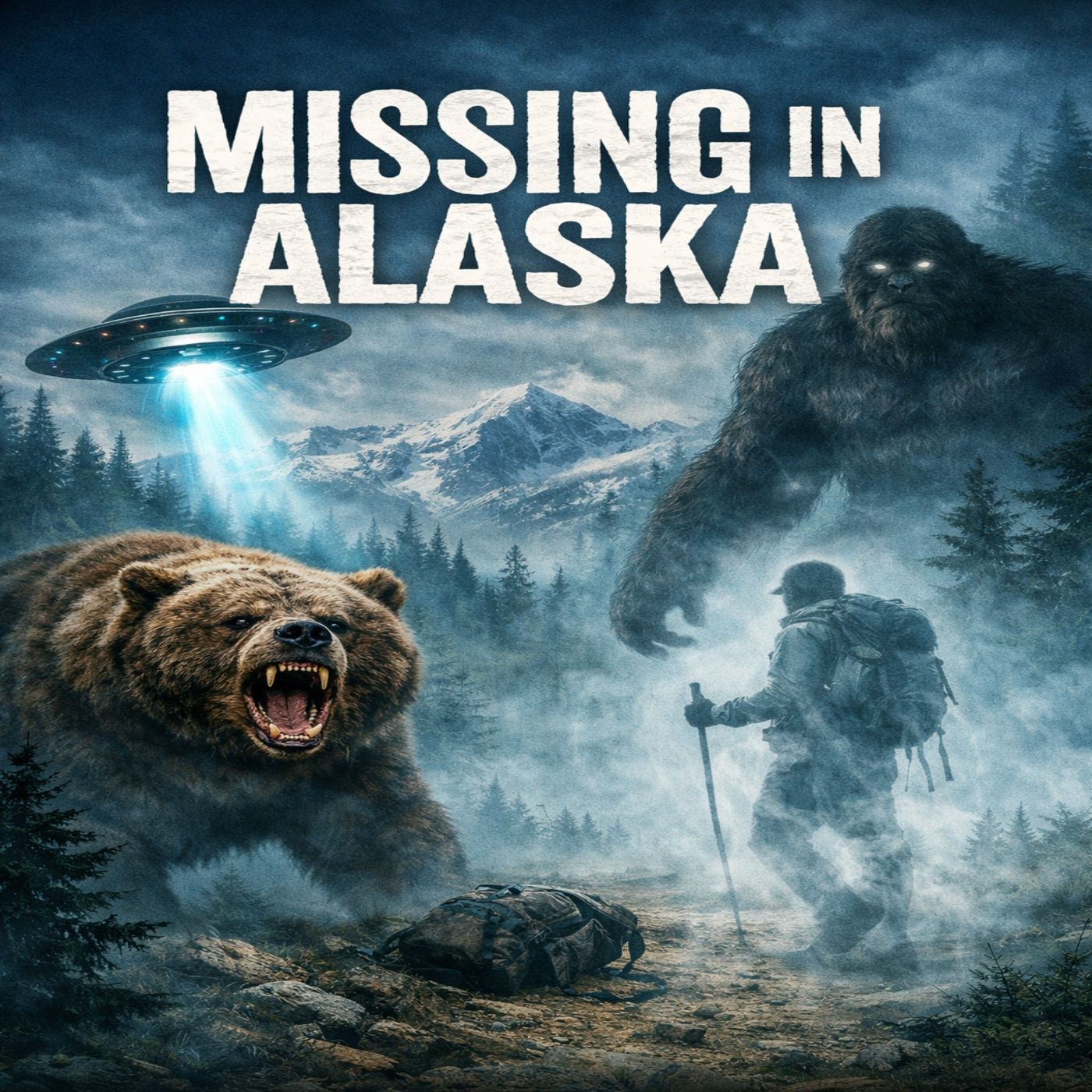
There's a corner of America where people vanish at a startling rate, where massive searches can turn up nothing, no trail, no remains, no answers. That place is Alaska. In this episode of Backwoods Bigfoot Stories, we head into the shadowed heart of the Alaska Triangle, the vast wilderness between Anchorage, Juneau, and Utqiagvik, to explore why so many disappear and why indigenous stories have warned about forest-dwelling abductors for generations.In the summer of twenty twenty-two, sixty-nine-year-old Mary Dawn Wilson drove her Ford Focus nearly seven miles down the Stampede Trail near Healy, Alaska, a rugged route tied to the Into the Wild legend and notorious for swallowing travelers. With a two-year-old child in the back seat, Wilson pushed her vehicle far beyond where it reasonably could go.When the car became stuck in mud, she made a decision no one can explain. She locked the toddler inside the vehicle and walked deeper into the wilderness, away from the highway and toward the interior.Search teams deployed helicopters, thermal imaging, drones, ATVs, and trained dogs. They located Wilson's personal belongings about a mile beyond the stuck car, proof she kept going. After that, the trail went cold. No footprints. No sign. Nothing. After three days, the active search was suspended. Mary Dawn Wilson has never been found.We zoom out to examine the bigger pattern, thousands of disappearances across Alaska over the decades, many ending in complete erasure. We revisit chilling cases tied to the Alaska Triangle, including the nineteen seventy-two disappearance of House Majority Leader Hale Boggs and Alaska Congressman Nick Begich, whose plane was never recovered despite one of the largest search operations in American history. We examine the case of Gary Frank Sotherden, whose skull was found years later with bear tooth marks but little else, no clothing, no gear, no explanation for how he ended up so far from where he was supposed to be.We consider Thomas Anthony Nuzzi, the traveling nurse last seen with an unidentified woman who has never been located, both of them vanishing into the Alaskan night without a trace. And we look at Michael LeMaitre, a marathon runner who vanished during a major, heavily monitored event on a mountainside crowded with other competitors and spectators, disappearing in broad daylight despite sophisticated search technology that should have been able to locate any warm body on that mountain. Alaska Native traditions carry their own explanations for these disappearances, stories of entities that mimic, lure, and take. The Tlingit speak of the Kushtaka, the land otter man, a shapeshifter said to imitate voices and faces to draw victims away from safety. The Yup'ik tell of the Hairy Man they call Miluquyuliq, a powerful forest presence that watches travelers from the treeline with an intensity that goes beyond mere animal curiosity. And the descendants of Portloc