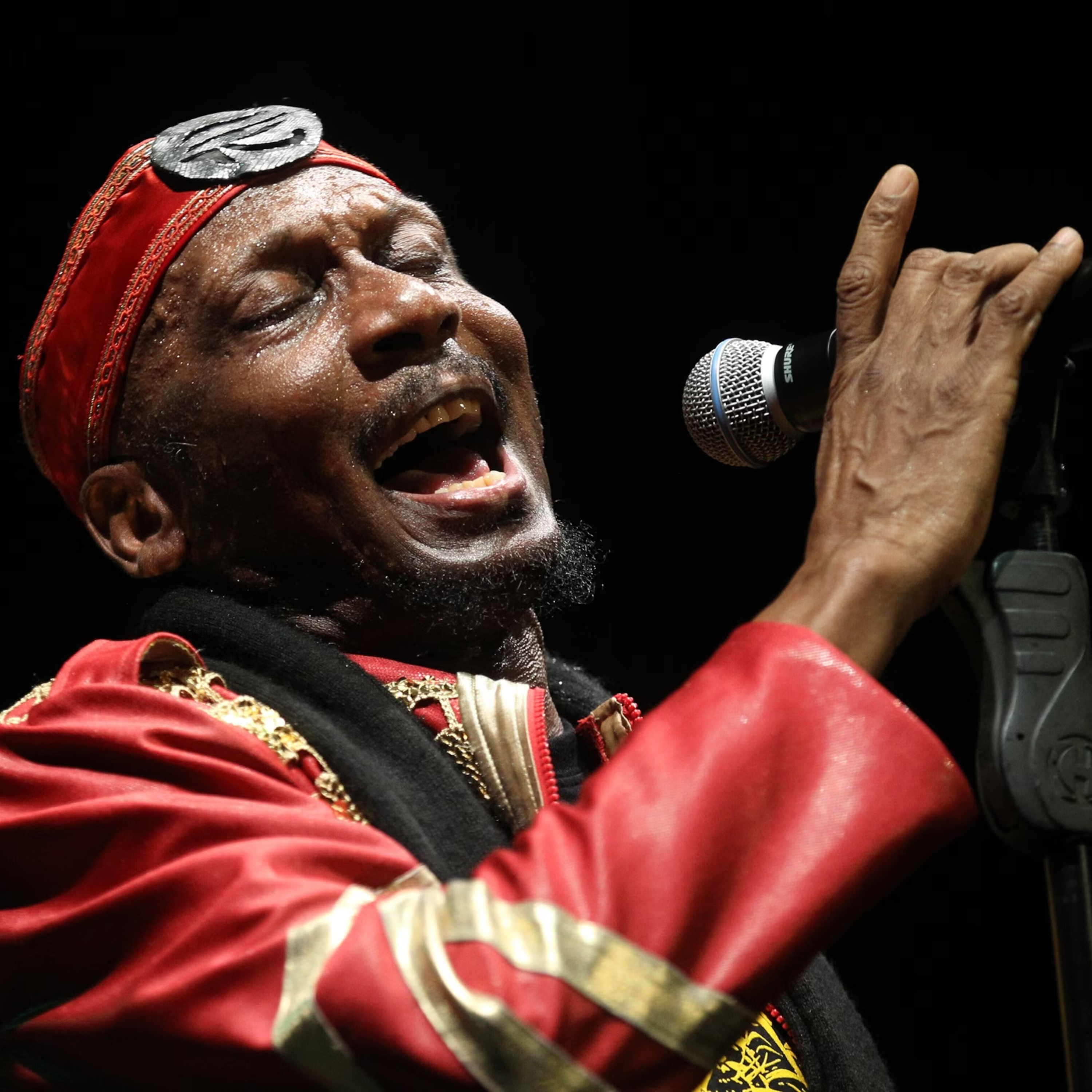
About this episode
Jimmy Cliff, born James Chambers on 30 July 1944 in Somerton, St. James Parish, Jamaica, emerged from humble beginnings to become one of reggae’s most beloved and influential figures. His parents worked modest jobs on a rural farm, and from a young age, Cliff showed a natural gift for singing. As a child, he sang in his church choir; by his early teens he had moved with his family to Kingston, determined to carve out a career in music. At just 14 years old, Cliff scored his first hit with the self-penned single “Hurricane Hattie”, a song that nods to his own miraculous arrival during a storm. With his early success in Jamaica, he soon caught the attention of producer Leslie Kong, whose Beverly’s label would provide a platform for Cliff to record more material and refine his style. In 1965, Cliff followed an invitation from Chris Blackwell, founder of Island Records, to move to the United Kingdom. While in London, he experimented with combining ska, rocksteady, and soul influences, earning recognition beyond Jamaica. Over the late 1960s, he released key tracks like “Wonderful World, Beautiful People” and “Vietnam”, the latter gaining admiration for its protest message. A turning point in his career—and in the global recognition of reggae—came in 1972 with the film The Harder They Come, directed by Perry Henzell. Cliff starred as Ivan Martin, a small-time musician who is forced into a life of crime. The movie’s gritty realism and its all-star soundtrack, featuring Cliff’s vocals on songs such as “Many Rivers to Cross”, “Sitting in Limbo”, and the title track itself, resonated widely. The film is often credited with helping bring reggae to a wider international audience. Though Cliff continued to release music through the 1970s, he also explored his spiritual side—spending time in Africa and embracing Islam, as well as other spiritual practices. In the 1980s, he returned to a more mainstream sound and released Cliff Hanger, winning his first Grammy Award in 1985. The success continued: in 1993, his cover of Johnny Nash’s “I Can See Clearly Now” for the Cool Runnings movie soundtrack became a global hit, reintroducing his voice to a new generation. Throughout his life, Cliff recorded prolifically—producing over 30 albums. His later work continued to reflect his commitment to social justice: in 2012, his album Rebirth, co-produced with Tim Armstrong of Rancid, won him another Grammy. In 2022, he released Refugees, a deeply humanitarian record inspired by global crises, which he used to voice solidarity with displaced people. Jimmy Cliff’s influence extended far beyond his